Sign styles
Types of channel letters: every style explained
Every type of channel letter in one place: front-lit, halo-lit, dual-lit, open-face, RGB, non-lit and marquee, plus how they mount and how to choose.
Updated
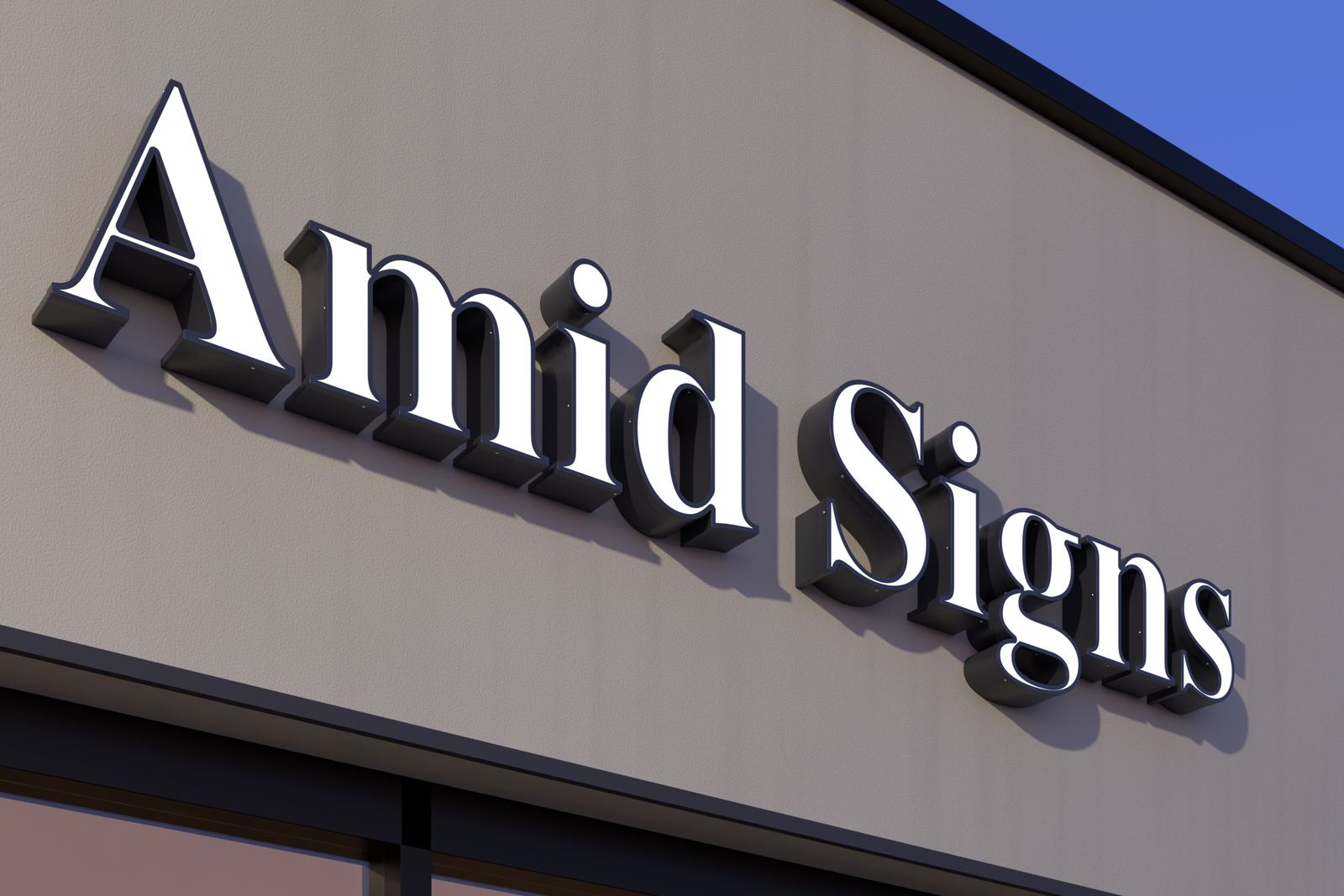
Channel letters come in four lit types: front-lit, halo-lit, front-and-back lit and open-face. Two close relatives share the same build: non-lit dimensional letters and marquee bulb letters. The type is decided by where the light comes out. Edge style, finish and mounting are separate choices you make on top of it.
What every channel letter has in common
A channel letter is a hollow letter built in parts:
- Returns: the sides of the letter, bent to follow its outline. They set the depth.
- Face: the front. Translucent acrylic on a front-lit letter, solid metal on a halo-lit or non-lit letter, open on an open-face letter.
- Back: closed metal on most letters, translucent acrylic on a halo-lit letter so the light can get out.
- Light: LED modules inside the letter, or LED neon on open-face letters.
- Power: a power supply that turns building power into the 12 V DC the LEDs run on.
Most sign shops build letters from aluminum. Every letter we make is 304 stainless steel, which is why 304 stainless vs aluminum is worth a read if you are comparing quotes. How channel letters are made walks through the build step by step.
The types at a glance
| Type (also called) | Where the light comes out | At night | Best for |
|---|---|---|---|
| Front-lit (face-lit) | Through the acrylic face | Evenly lit letters | Reading from far away and at an angle |
| Halo-lit (back-lit, reverse) | Out the back, onto the wall | Dark letters with a glowing outline | Lobbies, salons, offices, close to medium distance |
| Front-and-back lit (dual-lit) | Through the face and out the back | Lit face plus a halo | Busy streets, brands that want reach and depth |
| Open-face with LED neon | From LED neon inside an open channel | A line of light down each stroke | Bars, cafes, retro brands |
| RGB color-changing | Through the face, color set by a controller | Any color, or changing scenes | Nightlife, events, seasonal color |
| Non-lit dimensional | None | Needs light from elsewhere | Daytime signs, building names, lobbies |
| Marquee bulb | From bulbs set along the face | Rows of bright points | Events, venues, photo walls |
Front-lit (face-lit)
The most common type on storefronts. LED modules inside light a translucent acrylic face, so the face color shows by day and glows at night. Front-lit letters come with two edge styles: a trim cap, a 1 in plastic trim that holds the face with about a 1/4 in lip, or trimless, where the face sits on the front edge of the return and only the lit face shows. Trim cap vs trimless compares them. Return depth is set on the drawing; 3 in and 5 in are the common depths.
See front-lit channel letters and trimless front-lit letters.
Halo-lit (back-lit, reverse)
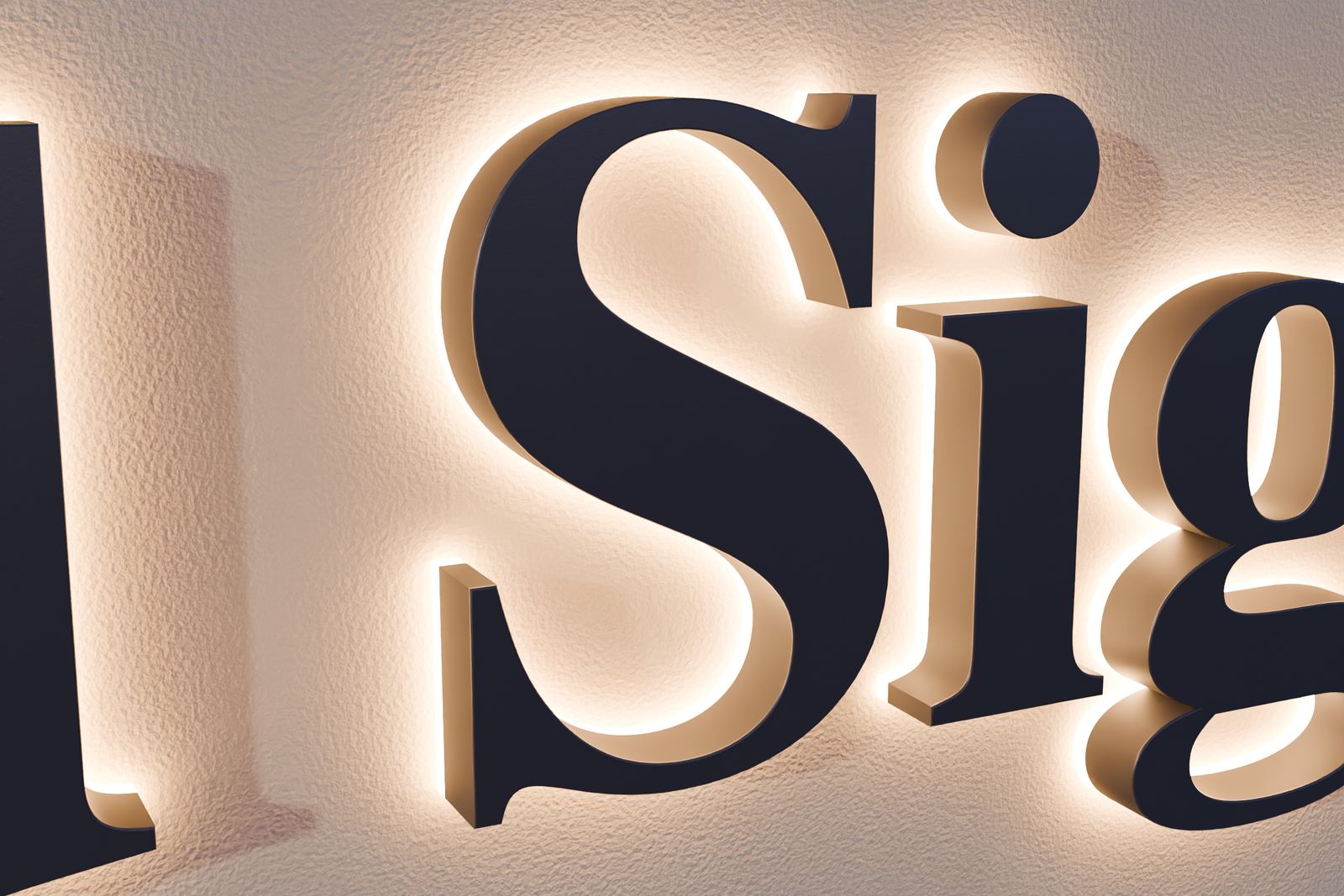
A closed letter with a solid 304 stainless face, brushed, painted any color, gold, or printed with your artwork. The back is translucent acrylic, and the LEDs inside light it so the glow spreads onto the wall around each letter. Typical depth is 2 to 3 in. By day you see metal letters; at night you see their outline in light. The wall behind matters: a light, matte surface gives the cleanest halo. Halo-lit letters explained covers walls, finishes and light colors.
See halo-lit channel letters, gold halo-lit letters and black halo-lit letters.
Front-and-back lit (dual-lit)
An acrylic face plus an acrylic back, so the face glows and a halo shows on the wall at the same time. It is the most eye-catching of the lit types at night and suits a busy street or a brand that wants both readability and depth. See front-and-back lit letters.
Open-face with LED neon
A stainless steel channel that is open at the front. A run of LED neon follows the centerline of each stroke, held by clips and usually set toward the front of the channel. Open-face letters began as housings for exposed glass neon; LED neon gives the same retro line of light on 12 V DC. Open-face neon channel letters covers fonts and care, and LED vs neon signs explains how LED neon compares with glass.
RGB color-changing
A front-lit build with RGB modules and a controller, so the face can show a chosen color or run scenes. RGB color-changing signs explains what the controller does and where cities limit changing light. See RGB color-changing channel letters.
Non-lit dimensional letters
The same 304 stainless construction with no lights inside, finished brushed, mirror, gold (titanium-coated) or painted. They suit building names, lobbies and daytime businesses. Lighting can only be added later by rebuilding the letters, so decide before you order. Channel letters vs dimensional letters compares them with lit letters and with flat-cut letters. See brushed stainless steel letters and the metal letters collection.
Marquee bulb letters
Open steel letters with a row of bulbs along the face, made as an indoor build or an outdoor build, for events, venues and permanent signs. The marquee letters guide covers sizes and bulbs.
Other signs built the same way
- Logo shapes: your logo mark built as a 3D channel shape, lit or not. See the lit logo sign.
- Small desktop letters for counters, shelves and events: desktop channel letters.
- Battery-powered halo letters with a remote, for walls without an outlet: battery-powered light-up letters.
- Lit house numbers: lit house numbers guide.
- Letters on a backer panel, and halo-lit printed acrylic panels: see individual letters vs backer panel.
Mounting is a separate choice
Any of these types can go up in more than one way:
- Flush to the wall. This is how ours mount. Every sign ships with a full-size (1:1) paper mounting template and the mounting hardware.
- On a raceway. A slim metal box, painted to match the wall, that the letters sit on. See raceway vs direct mount.
- On a backer panel. The letters mount on a panel that goes on the wall as one piece.
- On standoffs. Only when you ask for them. The one exception is a back-lit printed acrylic panel, which always stands off the wall so its light can spread.
Indoor or outdoor
The type does not change between indoor and outdoor; the parts inside do. Outdoor builds use IP65-rated LED modules and hard-wired outdoor power supplies that a licensed electrician connects. Indoor signs usually plug in through an adapter. Indoor vs outdoor channel letters explains the differences.
When channel letters are not the best fit
Individual letters are not the answer to every sign:
- The message changes often, or the artwork is a photo or a lot of text. A lightbox sign takes a new printed face more easily.
- People walk past the front of the building rather than look at it. A blade sign that sticks out from the wall reads from along the sidewalk.
- The text is very small, such as a phone number or a tagline under a large name. Small strokes are hard to light; see choosing a font for channel letters.
- The wall is dark or rough and you want halo letters. Choose front-lit, or put the letters on a backer panel.
How to choose in four questions
- How far away is the reader? Across a parking lot or from a car, start with front-lit or front-and-back lit. From the sidewalk or inside a lobby, any type works. How tall should sign letters be sizes them.
- What is the wall like? Halo needs a light, matte surface. Front-lit and open-face work on almost any wall.
- Does the sign matter more by day or by night? Front-lit shows its color both ways. Halo and non-lit letters are about the metal by day.
- What do your lease and your city allow? Many sign programs list the lit types they accept. Check before you design.
Then send your logo or text and wall size through get a free drawing. We email a drawing with a lit preview and an exact price, and nothing is built until you approve it. For a first range, try the price estimator.
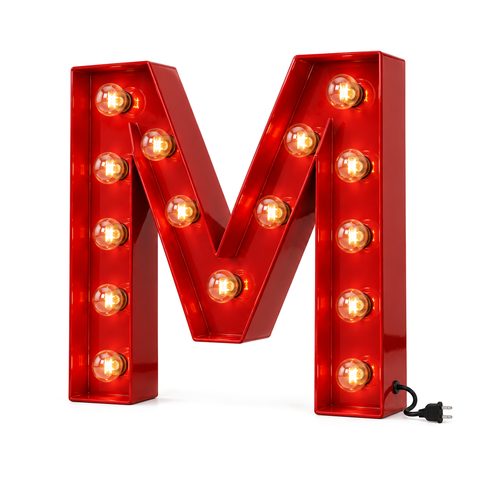 Marquee Light-Up Letters with Bulbs