Sign styles
304 stainless vs aluminum channel letters compared
Most channel letters are aluminum; ours are 304 stainless steel. How the two metals compare on corrosion, finishes, stiffness, weight and seaside sites.
Updated
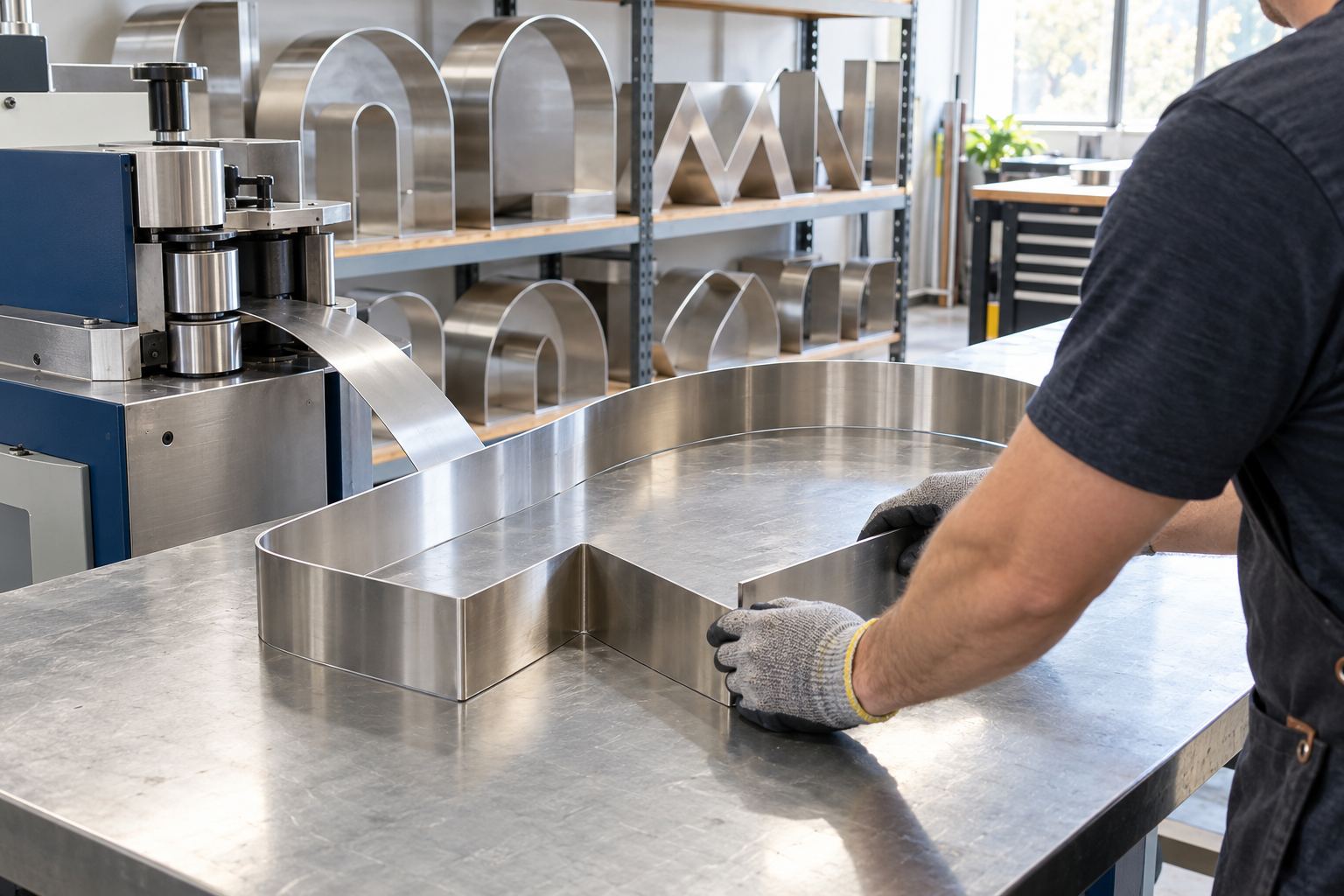
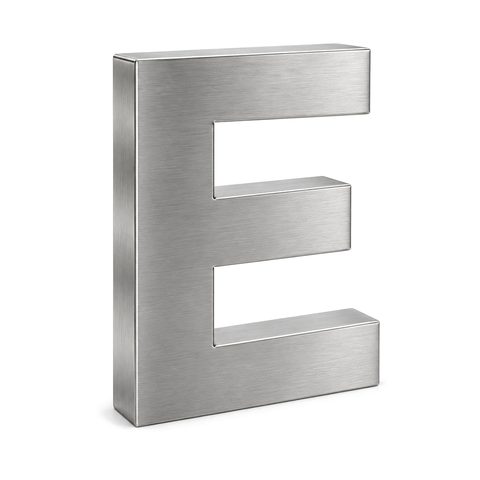
Most channel letters in the US are made from aluminum coil that comes prepainted. Ours are 304 stainless steel. Stainless can be left bare in brushed or mirror finishes, is about three times as stiff as aluminum for the same thickness, and holds up well outdoors. It is also heavier, and near the ocean it needs rinsing to stay bright.
Here is how the two metals compare, so you can read any quote side by side.
What aluminum channel letters are
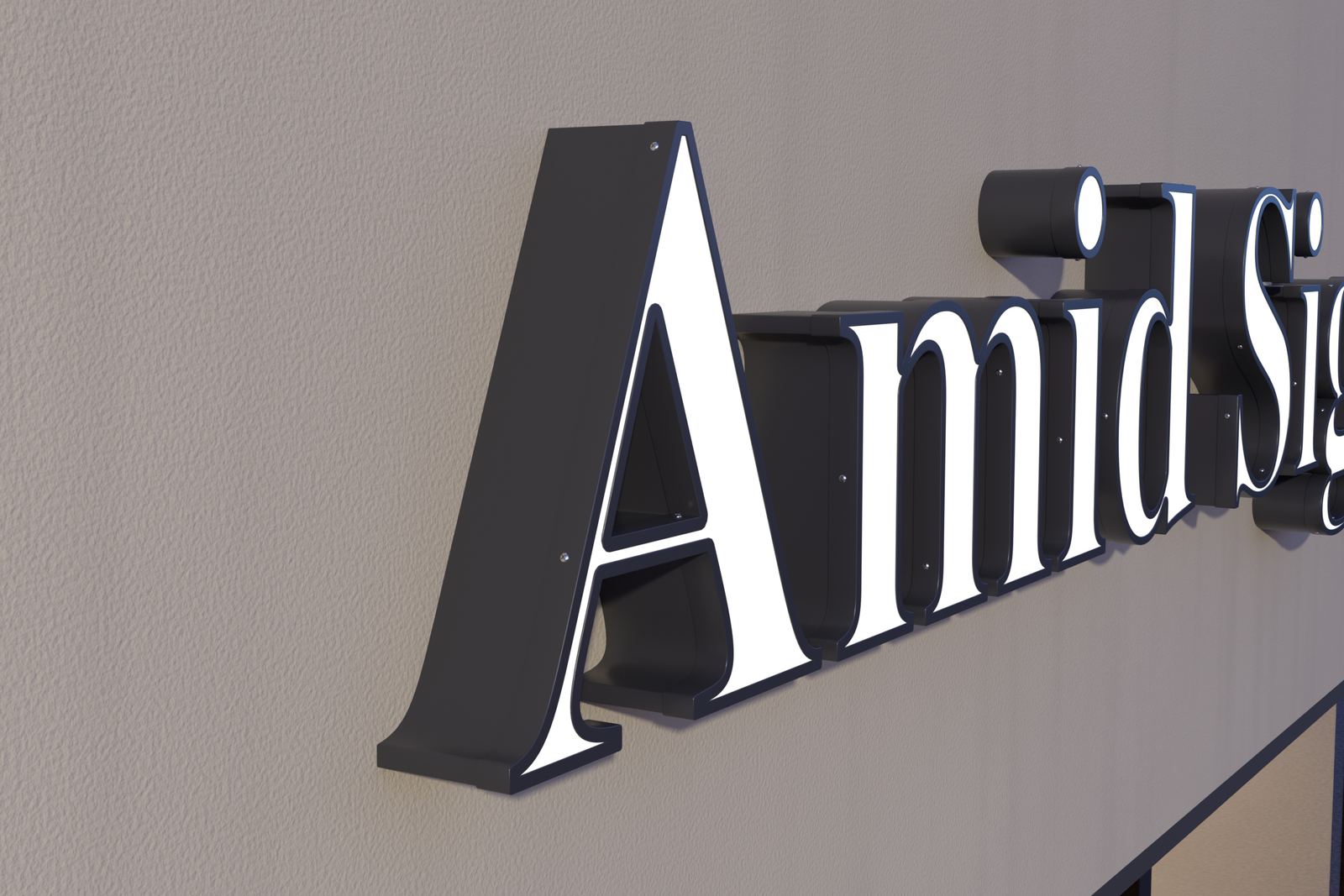
In a typical sign shop, letter returns (the sides) are bent from aluminum coil that comes prepainted, usually around .040 in thick, with heavier .063 in coil for large letters. The backs are aluminum sheet, the face is acrylic, and a trim cap holds the face on. It is a light, fast system, and it is the industry default for good reasons: the metal is easy to bend and the coil comes in the widths letters need.
Aluminum does not rust the way steel does. Its look, though, comes from the paint. A scratch shows bare metal underneath, and the color is only as good as the coating.
What 304 stainless steel is
Grade 304 is the most common stainless steel. It is iron with about 18% chromium and 8% nickel, which is why it is also called 18-8. The chromium forms a very thin oxide film on the surface that protects the steel, and when the surface is scratched, that film forms again on its own in air. It is used for architectural trim, railings and kitchen equipment for the same reason we use it on letters: it looks good bare and keeps looking good.
We build every channel letter in 304 stainless: the returns on all letters, and on halo-lit and non-lit letters the face as well.
Side by side
| 304 stainless (what we use) | Aluminum (common in the industry) | |
|---|---|---|
| Finish options | Bare brushed, mirror, gold (titanium-coated), painted, printed | Almost always painted or prefinished |
| Rust | Does not rust in normal outdoor air | Does not rust |
| Seaside sites | Can tea-stain; rinse regularly | Depends on the paint or coating |
| Scratches | Same metal underneath; brushed finishes can be blended | Bare metal shows through the paint |
| Stiffness, same thickness | About 3 times aluminum | Baseline |
| Weight, same thickness | About 3 times aluminum | Baseline |
Corrosion and outdoor use
Grade 304 resists corrosion well in a wide range of outdoor air: inland towns, cities, suburbs, indoors. That covers most signs.
The exception is salt. Within a few miles of the ocean, and in spots where road salt splashes, 304 can develop tea staining, a light brown surface discoloration. It does not weaken the steel or shorten its life; it is a cosmetic issue. It is worst on surfaces the rain does not wash, such as the underside of a letter or a spot under an overhang. Some specifiers choose grade 316 for signs right on the coast. We build in 304, so if your sign is near the sea:
- Rinse the letters with fresh water a few times a year, more often right on the beach.
- Wash with mild soap and warm water on a soft cloth, then rinse and wipe dry.
- Avoid cleaners with bleach or chlorides, and never use steel wool or abrasive pads.
- Consider a smoother finish. Mirror-polished stainless holds less salt than a brushed grain, so it resists staining better.
Channel letter maintenance and cleaning has the full routine, and indoor vs outdoor channel letters explains what else changes outside.
Stiffness and weight
For the same thickness, stainless steel is roughly three times as stiff as aluminum and roughly three times as heavy. In practice, a stiffer sheet holds its shape better: returns stay straight and corners stay crisp. The extra weight means solid anchors matter. Every sign ships with the mounting hardware and a full-size paper template, and mounting letters on brick, stucco and drywall explains which anchors suit which wall.
Finishes you get with stainless
Because stainless does not need paint to look finished, you can leave it bare:
- Brushed: a satin grain that hides fingerprints. See brushed stainless steel letters.
- Mirror: polished to reflect like glass.
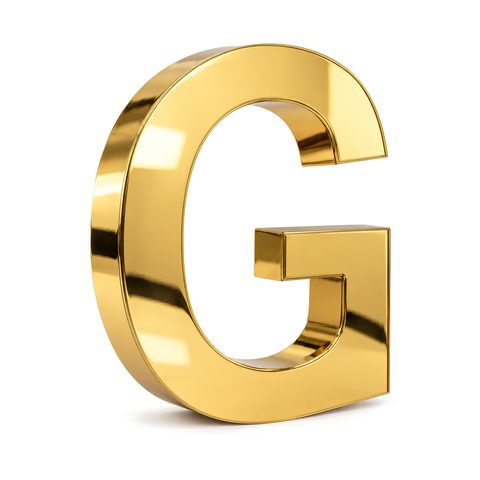
- Gold: a titanium coating over stainless. See mirror gold stainless letters.
- Painted: any color, when you want a brand color.
- Printed: artwork printed on the face of halo-lit letters.
Stainless steel letter finishes compares them, including where fingerprints and scratches show.
Lit letters in stainless
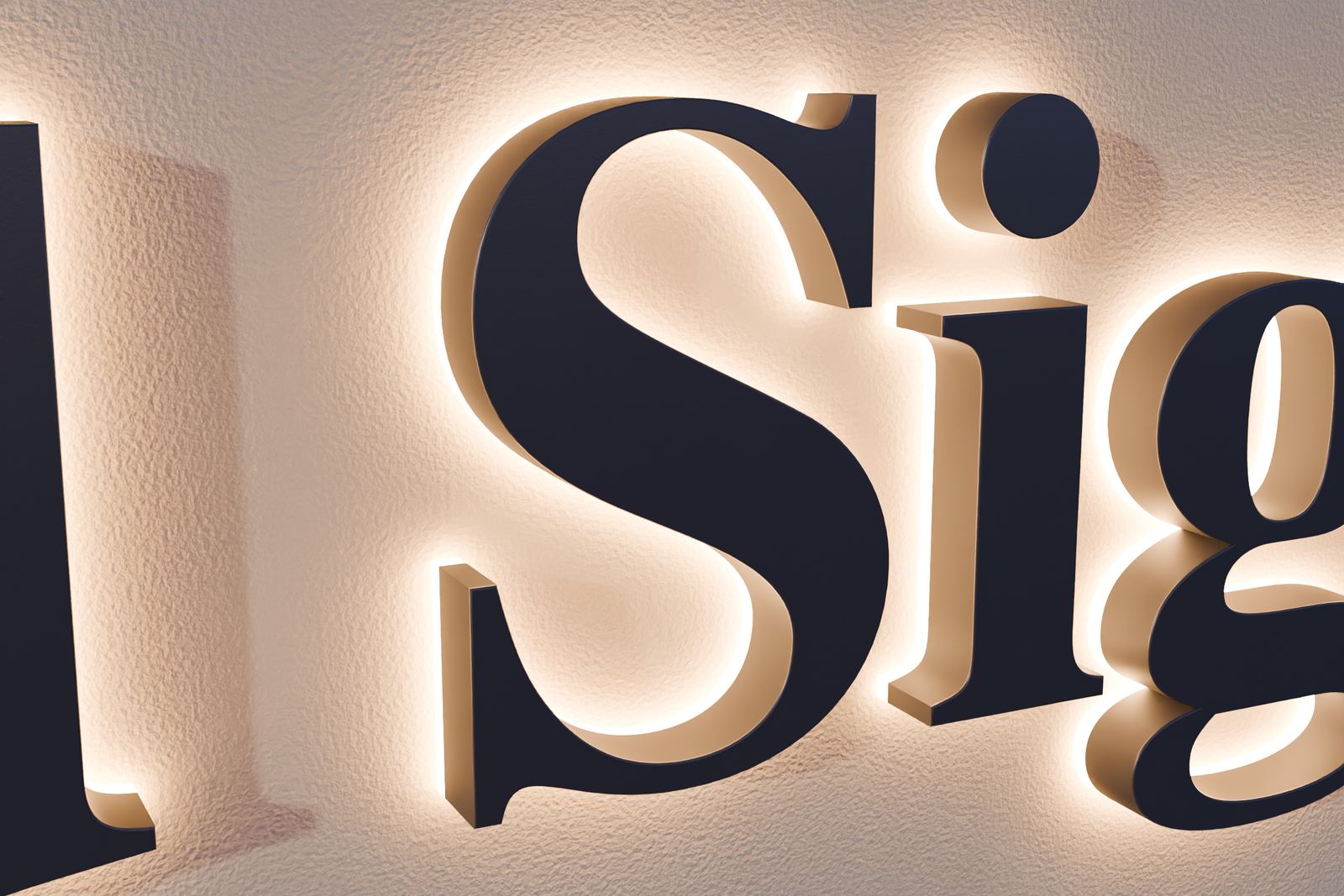
The metal choice does not change how a sign lights. Front-lit letters still have an acrylic face and LED modules inside. Halo-lit letters still glow from a translucent acrylic back. What stainless changes is the part you see when the sign is off: the sides of a front-lit letter, and the whole face of a halo-lit letter. On halo letters especially, that face is what people look at all day.
Comparing quotes
When you compare a stainless quote with an aluminum one, ask each maker the same questions:
- What metal are the returns, and what metal is the face?
- Is the finish bare metal, paint or a coating?
- How is the face held on: trim cap or trimless?
- What depth are the returns?
- Are the power supply and LED modules UL-listed components?
Then compare like for like. For a ballpark of our prices, use the price estimator. For an exact number, send your logo and wall size through the quote form; we email a free drawing with a lit preview, and nothing is built until you approve it.
For large building letters in bare stainless, see our building letters project, and to learn how a letter goes from drawing to finished piece, read how channel letters are made.