Planning
Sign permits: what cities ask for and how to prepare
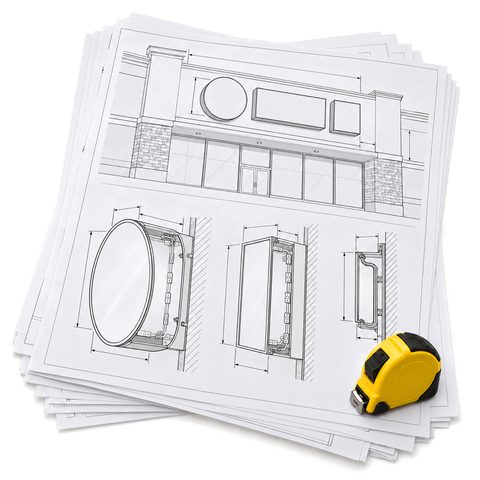
What a typical sign permit packet includes: application, landlord approval, sign and elevation drawings, electrical permit, licensed contractor and timing.
Updated

Most cities want five things for a sign permit: an application with a fee, written approval from the property owner, a drawing of the sign with its size, materials and lighting, an elevation showing where it goes on the building, and, for a lit sign, an electrical permit pulled by a licensed electrician. Many cities also require that the application comes from a registered sign contractor. Rules vary from city to city, so start with your city’s planning or building department.
We do not pull permits, and they are not included in the price. Your approved drawing shows sizes and mounting, which most permit applications ask for.
Who applies
In many cities only a licensed or registered sign contractor can apply for a sign permit, often with proof of insurance. In others, the business owner or property owner can apply. The electrical permit for a lit sign almost always goes to a licensed electrician. If you hire a local sign installer, they often know the local process and file the permit as part of the job, so ask about it when you collect installation quotes.
What a typical permit packet includes
| Item | What it is | Where it comes from |
|---|---|---|
| Application and fee | The city’s sign permit form | Your city’s website or permit counter |
| Property owner approval | A signed letter or form from the landlord or owner; some cities want it notarized | Your landlord |
| Sign drawing | The sign to scale: size, letter height, materials, colors, lighting | Your approved drawing from us |
| Building elevation | The front of the building with its width and height and the sign drawn in place | Your measurements and photos, see how to measure your wall |
| Attachment detail | How the sign is fixed to the wall | The mounting shown on the drawing, plus your installer’s anchors |
| Sign area calculation | The area of the new sign, and often of every existing sign on the building | Worked out from the drawing, see how cities measure sign area |
| Site plan | A plan of the lot with property lines and setbacks; mainly for freestanding and monument signs | Your landlord or a site survey |
| Electrical permit | A separate permit for wiring a lit sign | Your licensed electrician |
| Contractor license and insurance | Proof that the installer is registered with the city | Your installer |
Some signs need more:
- Projecting signs over a sidewalk often need a right-of-way or encroachment approval, a certificate of liability insurance naming the city and a signed hold-harmless agreement. See blade signs and projecting signs.
- Large or projecting signs may need structural calculations stamped by a licensed engineer. Thresholds differ by city, for example by sign area or weight.
- Historic districts and design districts often add a design review, such as a certificate of appropriateness, before the sign permit is issued.
If you need extra drawing sheets for your application, see our permit drawing package or the services collection.
Start with the landlord
In shopping centers and many downtown buildings, the landlord’s sign criteria come before the city. They can set the sign band, maximum letter height, colors, lighting style and whether letters must sit on a raceway. Many cities will not accept an application without the owner’s written approval. Get the criteria before you design, and get the landlord’s sign-off on the drawing before you file.
Electrical questions
A lit sign is an electrical installation as well as a sign. The electrician pulls the electrical permit, connects the power supply and arranges any inspection. Some inspectors and fire marshals also ask about the electrical parts or the face material:
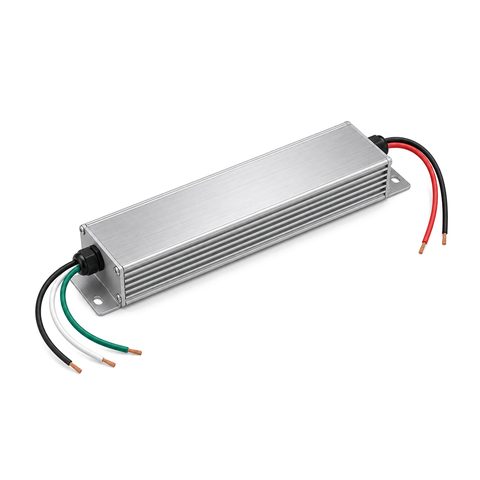
- Our signs use a UL-listed power supply and LED modules. If your inspector has asked for specific listing documents, tell us before you order, so we can tell you what we can supply for your sign.
- Standard acrylic is not flame-retardant. When a fire marshal asks for it, the acrylic can be swapped for flame-retardant polycarbonate. Say so when you request the drawing.
Sign electrical requirements covers circuits, disconnects and what to ask the electrician.
Historic districts and lighting
Historic and design review districts often set their own rules for how a sign is lit, and those rules differ a lot. Some treat halo-lit letters as indirect light and allow them where lit faces and lightbox signs are not. Others prefer outside lights such as gooseneck lamps, or rule out back-lighting as well. Read the district’s design guidelines before you choose a style, and expect the review board to look closely at the drawing. Front-lit vs halo-lit vs open-face compares the styles, and channel letters vs dimensional letters covers non-lit options.
What happens if you skip the permit
Putting up a sign without the permits your city requires usually costs more than getting them:
- Many codes double the permit fee, or add a penalty or investigation fee, when work starts before a permit is issued.
- The city can order an unpermitted sign changed or taken down, and some codes charge the cost of removal to the owner.
- A sign that has to come down to be fixed is installed twice.
How long it takes
Review times depend on the city and on how complete the application is. In the examples we checked, cities quoted roughly 7 to 14 business days for a first review of a complete sign application, and some codes allow 30 days or more. Expect longer when:
- the building is in a historic or design review district,
- the sign needs a variance because it is larger than the code allows,
- a structural review or encroachment agreement is needed,
- the application is missing something and has to be resubmitted.
Nothing is built until you approve your drawing, so you can apply for the permit with the drawing first and approve the order once the city signs off.
Common reasons applications come back
- No written approval from the property owner.
- The sign is larger than the allowance for the frontage.
- The elevation is missing the building width or the sign’s position.
- A lit sign was submitted without the electrical details or an electrician.
- The applicant is not a registered sign contractor where the city requires one.
A simple order of steps
- Get the landlord’s sign criteria and your city’s sign rules.
- Measure your wall and decide the style and size.
- Request a free drawing and check it against both sets of rules.
- Get the landlord’s written approval of the drawing.
- Your installer or you file the sign permit; your electrician files the electrical permit.
- Approve the order when the permit is issued.
The full sequence from lease to switch-on is in the storefront sign checklist.


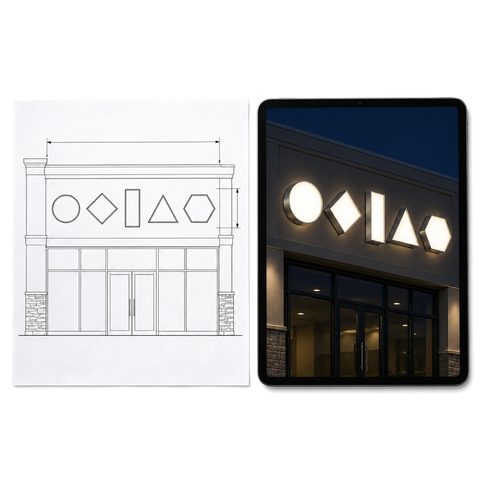 Free Sign Drawing and Lit Preview with Exact Price
 Double-Sided Blade Sign