Install and care
Raceway vs direct mount channel letters
Raceway or flush mount for channel letters? Compare the look, holes in the wall, wiring, service access and landlord rules, and see when each makes sense.
Updated

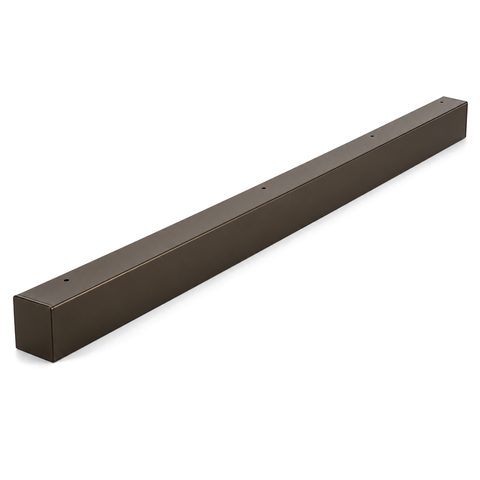
Direct mount (flush mount) fastens each letter to the wall on its own studs, with a wire hole behind each lit letter. It gives the cleanest look. A raceway is a slim metal box, painted to match the wall, that the letters sit on; the wiring and power supply go inside it, so the wall needs only a few holes. Choose flush when the look matters most and you can drill freely; choose a raceway when the landlord limits holes or the wiring cannot reach behind the wall.
Our letters mount flush to the wall by default. A raceway is an option for front-lit letters. Standoffs, which hold letters off the wall, are only used when a customer asks for them.
How each method works
Direct (flush) mount. Each letter has threaded studs on its back. You tape up the full-size paper template, drill the holes it marks, and set the studs in the wall. A lit letter also has a lead wire that passes through its own hole in the wall to a power supply inside the building or in a weatherproof box. How to install channel letters walks through it.
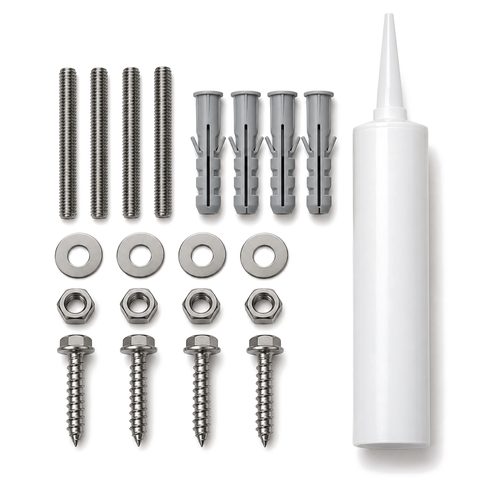
Raceway mount. The letters are fastened to a long, narrow metal box. The box holds the power supply and all the letter-to-letter wiring. The raceway is fastened to the wall with a few anchors, and the electrician brings power to one point on it. The channel letter raceway and channel letters on raceway show the setup.
Side-by-side comparison
| Direct (flush) mount | Raceway mount | |
|---|---|---|
| Look | Letters only, on the wall | Letters on a box painted to match the wall |
| Holes in the wall | Stud holes for every letter, plus a wire hole behind each lit letter | A few anchor holes and one power entry |
| Power supply | Inside the building, or in a weatherproof box | Inside the raceway |
| Wiring | Through the wall at each letter | Inside the raceway |
| Service access | Through the face of the letter, or from inside the building | Open the raceway cover or the letter face |
| Moving out | Every hole needs patching | The sign comes off as one unit; a few holes to patch |
| Projection from the wall | Letter depth only | Letter depth plus the raceway |
| Works with | Every style, including halo-lit | Front-lit and other styles lit from the front |
When a raceway makes sense
- The landlord limits holes. Shopping centers and multi-tenant buildings often write the mounting method into their sign criteria, and some ask for a raceway so the facade is not drilled at every letter. Read the sign section of your lease before you order.
- You cannot get behind the wall. Flush-mounted lit letters need a wire to pass through the wall at each letter and a place inside for the power supply. If the space behind the sign is a sealed parapet, a neighbor’s unit or solid masonry, a raceway keeps all of that outside on the wall.
- The wall is hard to drill. If the surface is fragile, or the owner does not want it drilled at every letter, one box on a few anchors is the simpler job.
- Short leases. A raceway sign comes down as one piece and leaves few holes behind.
- One trip up the ladder. The letters arrive already spaced on the raceway, so there is no letter-by-letter layout on site.
When flush mount is the better choice
- The look matters most. Flush letters show nothing but letters, which suits brick, stone, painted stucco and most lobby walls.
- Halo-lit letters. A halo letter’s glow spreads on the wall around each letter, so the letters mount flush on the wall itself. See halo-lit letters explained.
- Projection limits. Some cities limit how far a sign may stick out from the wall. A raceway adds its own depth behind the letters.
- Interior power is easy. In a lobby or a storefront with an open space behind the sign band, wiring through the wall at each letter is straightforward.
Service later on
Think about the day something needs fixing, not just the day the sign goes up.
- Flush mount. A front-lit letter is serviced through its face: the face comes off, the modules are inside. The power supply sits inside the building or in a weatherproof box, so it is reached from there. A halo-lit letter usually has to come off the wall to reach its LEDs.
- Raceway mount. The power supply and the wiring between letters are inside the raceway, so a technician opens the raceway cover to reach them without going inside the building. The letters themselves are serviced through the face, as with flush mount.
Either way, the electrical code wants the power supply to stay reachable. Do not let it end up sealed behind a finished wall.
How a raceway sign goes up
- Mark a level line for the raceway on the wall.
- Drill the anchor holes for your wall type. Mounting letters on brick, stucco and drywall covers the anchors.
- Lift the raceway, with the letters already on it, into place and fasten it. Use two people or a lift; a long raceway is awkward even when it is not heavy.
- A licensed electrician brings the building circuit to the raceway’s power entry and adds the disconnect switch, with the power off at the breaker.
- Seal the power entry and anchor holes on outdoor walls, and leave the drain holes open.
What to ask the landlord
- Which mounting methods are allowed: flush, raceway or backer panel?
- Are holes allowed in brick faces, or only in mortar joints?
- Where can wires pass through the wall, and who approves it?
- Is there a set raceway color or a set letter height?
- Who patches the wall when the sign comes down?
Bring the answers when you request a free drawing, and we will draw the sign with the right mounting. If the wall is very uneven or the letters need a frame of their own, individual letters vs a backer panel covers the third option.
Sizing and color
A raceway runs behind the letters and is painted to match the wall, so it reads as part of the building. The raceway length helper helps you work out how long yours should be. The raceway does not change the electrical rules: a hard-wired sign is still connected by a licensed electrician, with a disconnect switch within sight of the sign. For a ballpark on the letters themselves, try the price estimator.


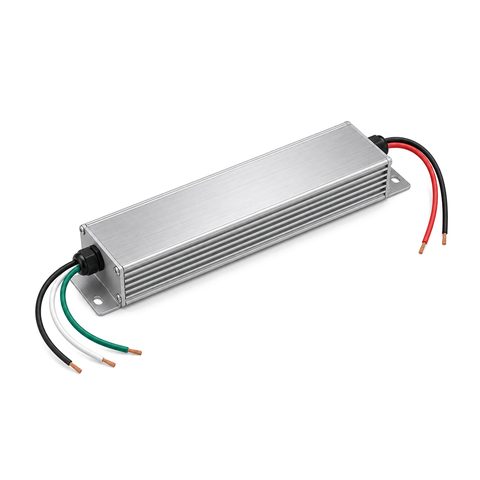 12V LED Sign Power Supply
 Halo-Lit Channel Letters