Sign styles
Individual letters vs backer panel vs raceway
Flush letters, letters on a raceway, or letters on a backer panel: how each looks, how many wall holes it needs, and which walls and leases it suits.
Updated
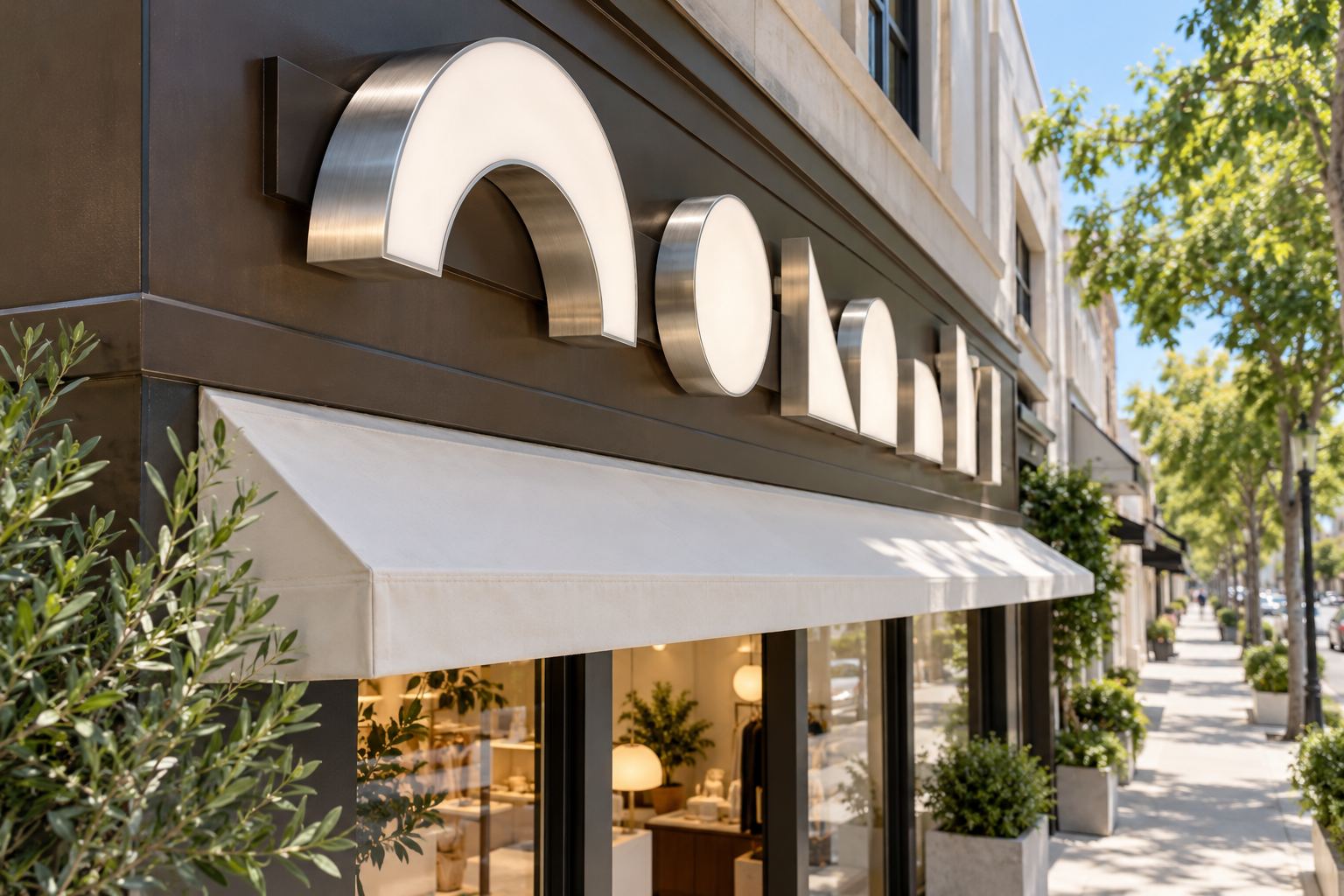
Individual letters mounted flush to the wall give the cleanest look, and that is how our letters mount by default. A raceway is a slim metal box the letters sit on: fewer holes in the building, easier to take down, and often required by landlords. A backer panel puts the letters on a flat panel, which helps on busy or dark walls, but the panel usually counts toward your sign area.
The three at a glance
| Flush-mounted letters | Letters on a raceway | Letters on a backer panel | |
|---|---|---|---|
| What you see | Letters only | Letters on a slim bar painted to match the wall | Letters on a shaped panel |
| Holes in the building | Fasteners at every letter, plus wire holes | A few anchors for the raceway | Anchors for the panel |
| Wiring | Through the wall behind the letters | Usually inside the raceway | Behind the panel |
| Moving out | Letters come down, holes to patch | Raceway comes down as one piece | Panel comes down as one piece |
| Sign area the city counts | Usually rectangles around the words | Check your code | Often the whole panel |
| Best for | Owned buildings, clean modern fronts, lobbies | Leased storefronts, landlord rules | Brick, stone, dark or busy walls |
Flush-mounted individual letters
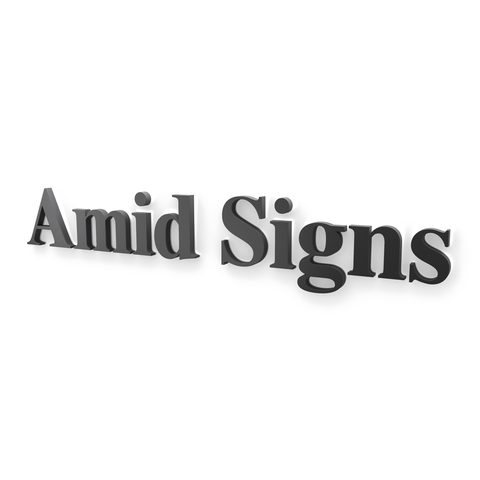
This is our default. Each letter fastens directly to the wall with the hardware we ship, and a full-size (1:1) paper template shows exactly where every fastener and wire hole goes. Nothing sits between the letters, so the sign looks built into the building.
It suits buildings you own, new construction, interior walls and lobbies, and storefronts where the landlord allows it. It needs more holes than the other two methods, and on some wall materials, or under some leases, that is not allowed.
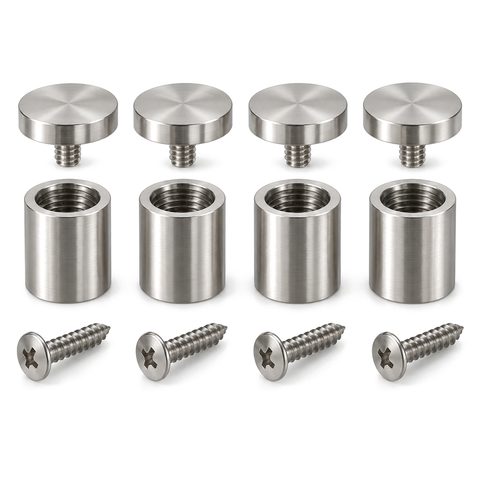
Halo-lit letters work flush too. Their backs are translucent acrylic, so the light spreads around each letter onto the wall even with no gap behind it. Standoffs are available if you ask for them; see the standoff mounting kit. How to install channel letters walks through the template method, and mounting letters on brick, stucco and drywall covers anchors.
Letters on a raceway
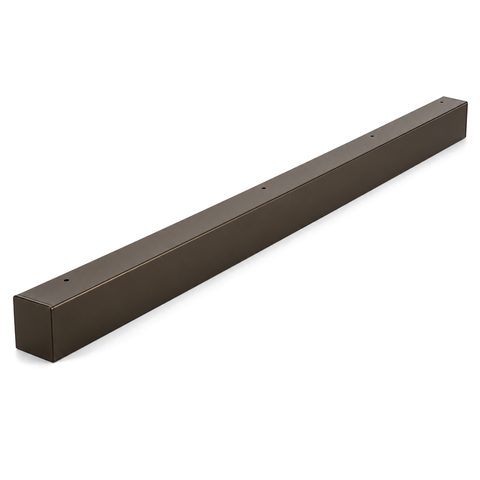
A raceway is a slim metal box, painted to match the wall, that the letters mount on. In most raceway signs the wiring, and often the power supply, sit inside it. The whole sign goes up as one unit with a few anchors.
Why landlords like it:
- Fewer holes in the facade.
- Easier removal when a tenant leaves.
- One place for the wiring, which keeps service simple.
The trade-off is the look. The raceway is visible behind the letters, even when it is painted to match. Some shopping center sign programs require raceways; others ban exposed raceways. Read your sign criteria before you choose.
To size one, the raceway length helper works out the length from your letters. See channel letters on raceway for a complete sign, or the channel letter raceway on its own. Raceway vs direct mount goes deeper on wall penetrations and landlord rules.
Letters on a backer panel
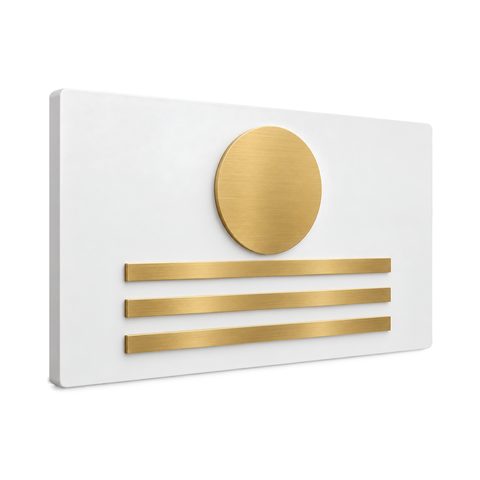
A backer panel is a flat panel behind the letters, cut to a shape that suits the sign. The letters mount on the panel, and the panel mounts on the building. See letters on backer panel.
Use a panel when:
- The wall fights the sign. Multicolored brick, rough stone or a dark facade can swallow the letters. A panel in a contrasting color gives them a clean background.
- Halo letters need a better surface. A halo needs a light, matte surface to reflect off. On a dark or glossy wall, a light, matte panel fixes that. Avoid a glossy panel, which mirrors the LEDs.
- The wall is hard to drill letter by letter. Brick, stone and some cladding are easier to fasten one panel to than many letters.
- Old holes need covering. A panel can hide the holes and shadow left by the last tenant’s sign.
The cost of a panel is sign area. In many city codes, when copy sits on a panel, the area is measured around the whole panel, not just the letters. A big panel can use up your allowance fast. How cities measure sign area shows the common methods, and the rule always comes from your city, so check with yours.
The one thing that always stands off the wall
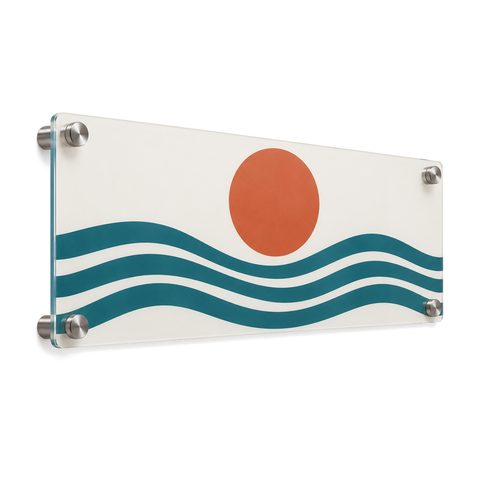
A back-lit printed acrylic panel is different from letters. Its light comes out behind a flat panel, so it needs space to spread. Our halo-lit acrylic panel always mounts on standoffs, away from the wall, for that reason. Everything else we make mounts flush unless you ask otherwise.
How to choose
- Read your lease. The sign criteria may require a raceway, ban one, or limit holes in the facade.
- Look at the wall. Smooth and plain: flush. Busy, dark or hard to drill: backer panel. Leased fascia: raceway.
- Think about how long you will stay. Short lease or likely move: a raceway or panel comes down in one piece.
- Check your city’s sign area rule before you pick a panel size.
- Send photos. Through the quote form, send your logo, wall size and a photo of the wall. We email a free drawing with a lit preview and an exact price, and nothing is built until you approve it.
Mounting hardware, raceways and standoffs are all in the mounting collection, including the letter mounting hardware kit. Installation is not included, and a hard-wired outdoor sign needs a licensed electrician.
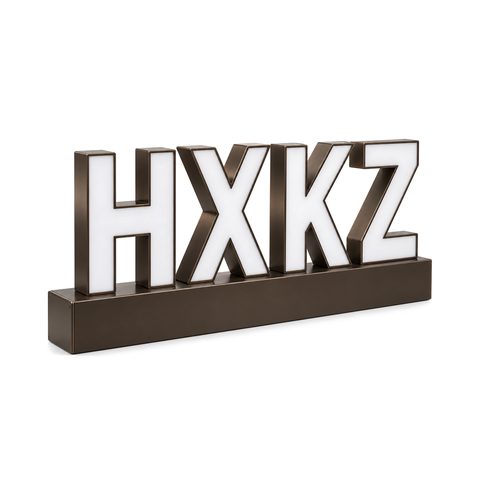
 Halo-Lit Channel Letters