Sign styles
Halo-lit letters explained: how the glow works
How halo-lit channel letters make their glow, why wall color and texture matter, how ours glow while mounted flush, and which face finishes you can pick.
Updated
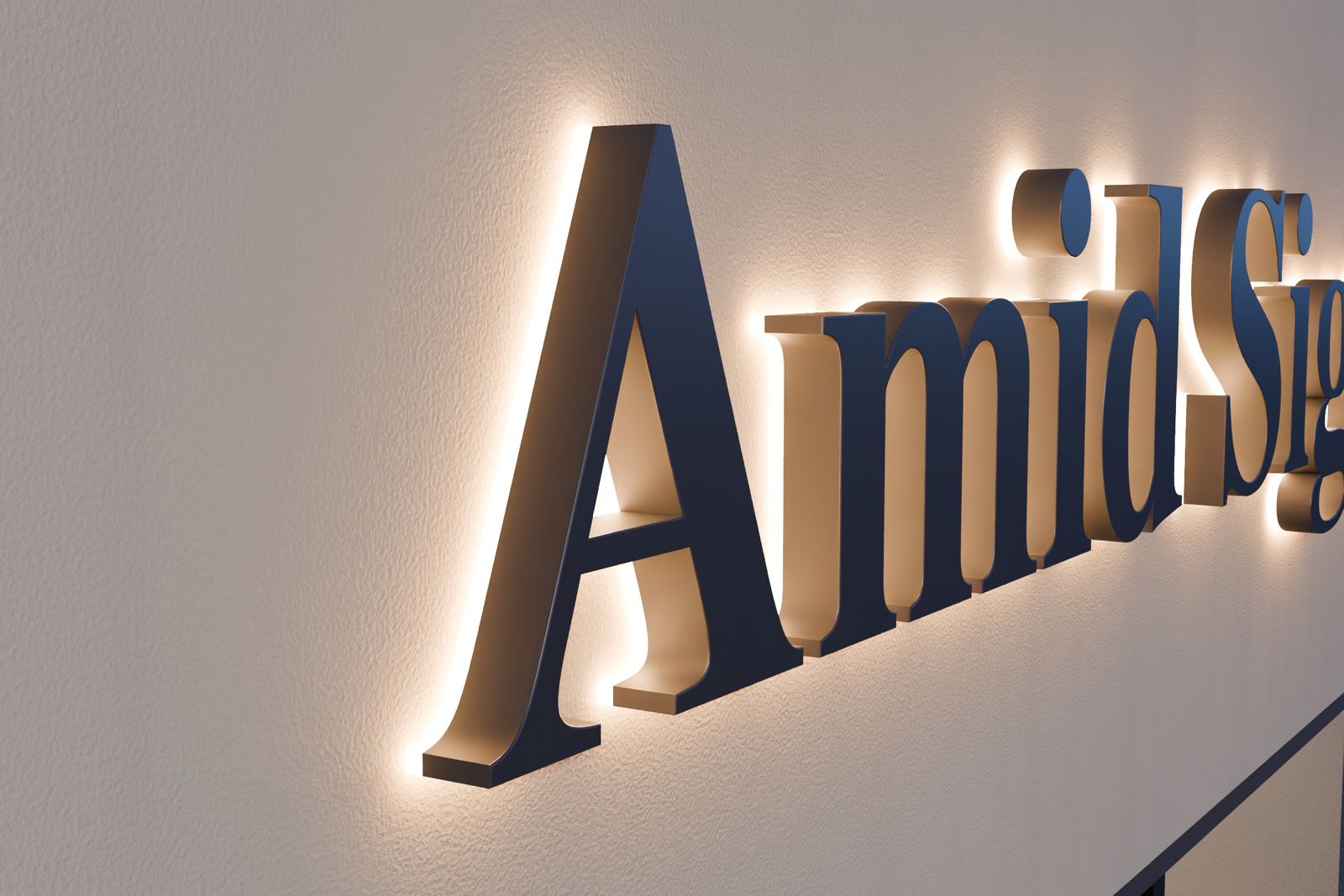
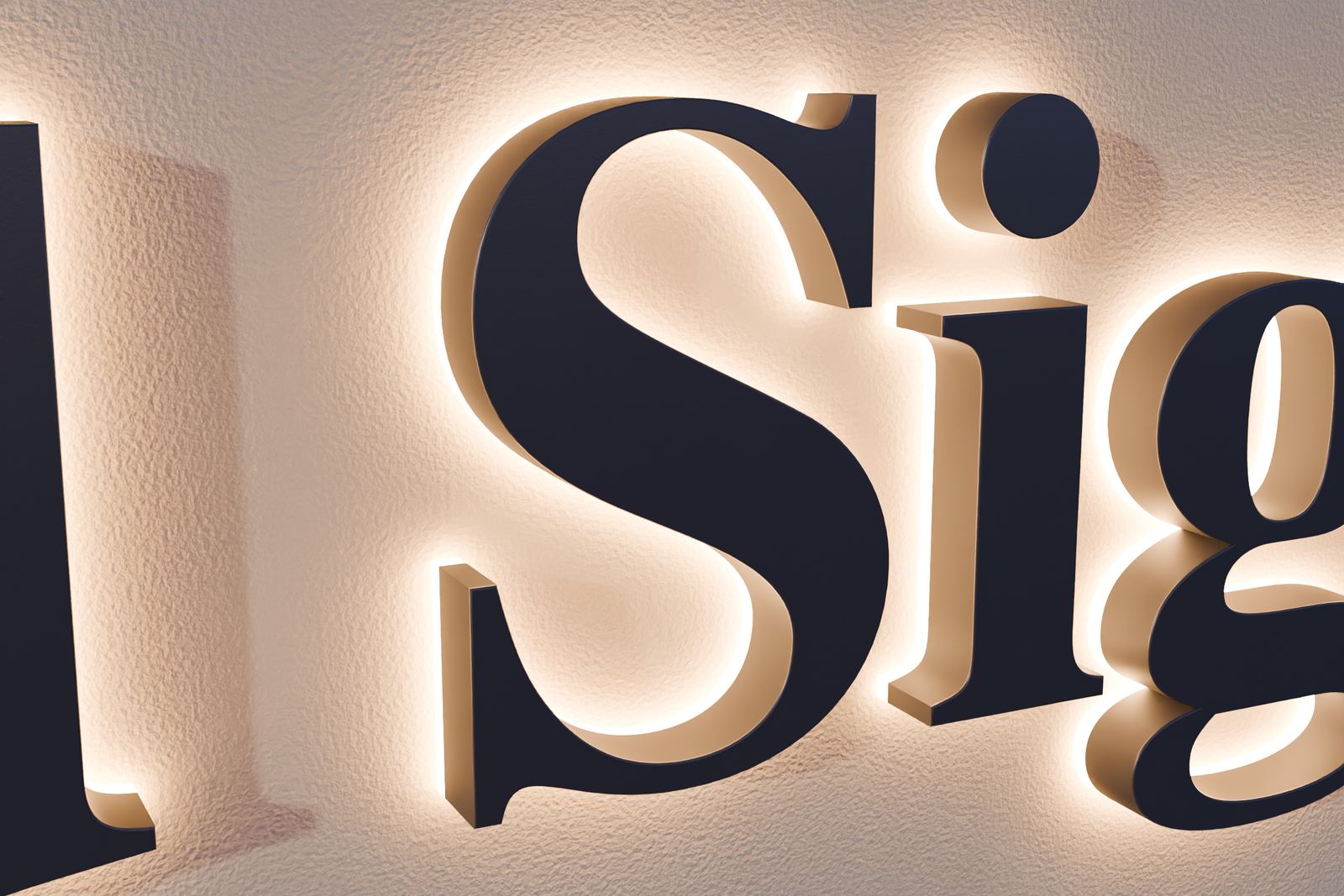
Halo-lit letters, also called back-lit or reverse-lit letters, have a solid metal face and a translucent back. LEDs inside shine out through the back, the light lands on the wall, and it spreads around each letter, so at night you see dark letters outlined in light. The wall does half the work: a light, matte wall gives the cleanest halo.
By day they look like solid dimensional metal letters. That combination, metal by day and glow by night, is why halo letters are a common choice for lobbies, salons, clinics and boutiques.
How a halo letter is built
- Face: solid 304 stainless steel, finished brushed, painted any color, gold, or printed with your artwork.
- Returns (sides): 304 stainless steel, typically 2 to 3 in deep.
- Back: translucent acrylic. This is where the light comes out.
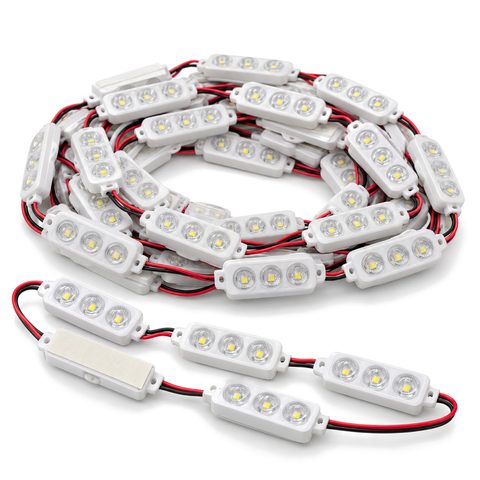
- Inside: LED modules that light the back.
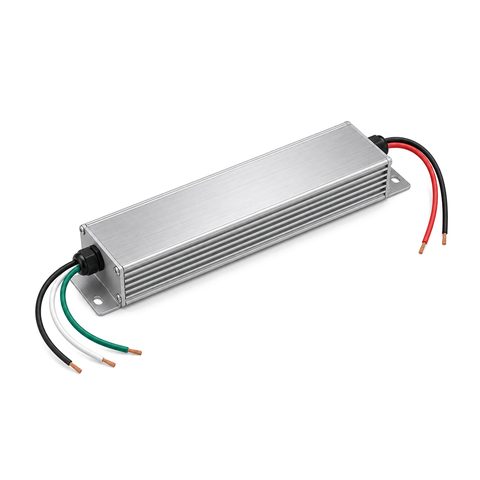
- Power: 12 V DC. Indoor letters usually plug in through a 100 to 240 V AC adapter. Outdoor letters use a hard-wired outdoor power supply that a licensed electrician connects. The power supply and LED modules are UL-listed components.
Every sign ships with a full-size (1:1) paper mounting template and the mounting hardware.
Flush mount vs standoffs
Many sign shops mount halo letters on standoffs, usually 1.5 to 2 in off the wall, with an open gap behind. A bigger gap gives a wider, softer halo. A smaller gap gives a tighter, sharper one.
Ours mount flush to the wall. Because the whole back of each letter is translucent acrylic, the light leaves through the back and spreads out past the letter edge onto the wall. You still get a halo, and it sits close to the letter.
| Flush (how we mount) | On standoffs (on request) | |
|---|---|---|
| Halo shape | Tight, well defined, close to the letter | Wider and softer |
| Daytime look | Letters sit solid on the wall | Letters float with a shadow behind |
| Hardware seen from the side | None | Standoff posts |
| When to pick it | Most walls, most signs | You want the floating look and the wider glow |
If you want standoffs, ask when you request your drawing, and see the standoff mounting kit. Standoffs also change the daytime look: the letters cast a shadow on the wall, and the posts show from the side.
Wall color and texture
The halo is reflected light, so the wall decides how it looks.
| Wall | What the halo does |
|---|---|
| White or light paint, matte | Brightest, cleanest halo |
| Smooth stucco or light plaster | Clean halo with a soft texture |
| Mid tones: beige, light gray, light wood | Good, slightly softer halo |
| Dark paint or dark cladding | Much of the light is absorbed; the halo looks dim |
| Glossy tile, glass, polished stone, metal | Reflects the LEDs as bright dots |
| Strong colors, red brick | The halo takes on the wall color |
| Rough stone, deep brick joints | Light scatters into a patchy outline |
When the wall works against you, you have three options:
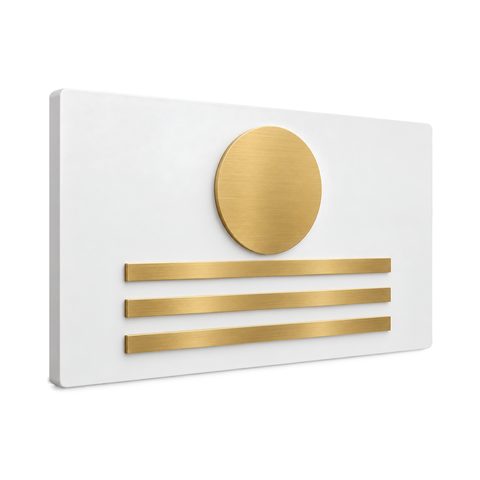
- Put the letters on a light, matte backer panel. Avoid a glossy panel, which mirrors the LEDs.
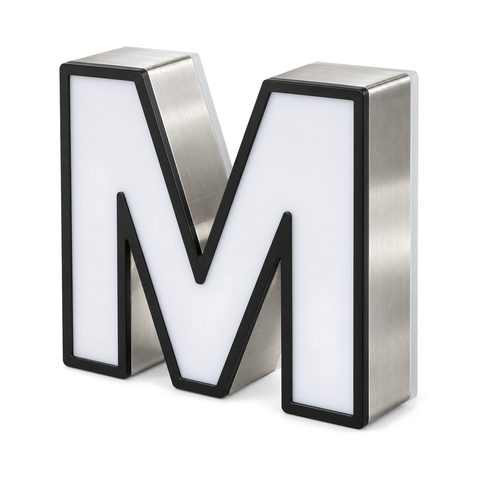
- Switch to front-and-back lit letters, which glow on the face and throw a halo.
- Use front-lit letters, which do not depend on the wall at all. Front-lit vs halo-lit vs open-face compares the three styles.
A photo of the wall at night, with the lights you already have on, tells us a lot. Send one with your request.
Light color
The LEDs come in white (6500 K), neutral white (4000 to 5000 K) and warm white (2700 to 3000 K). The white you pick mixes with the wall color: warm white on a warm wall looks warmer still, and cool white on a gray wall looks crisper. LED color temperature for signs explains the choice. A dimmer, a timer and a dusk-to-dawn photocell are available options.
Face finishes
The face is what people see in daylight, so pick it the way you would pick any metal finish.
- Brushed stainless: a soft satin grain that hides fingerprints and light scratches. See halo-lit channel letters.
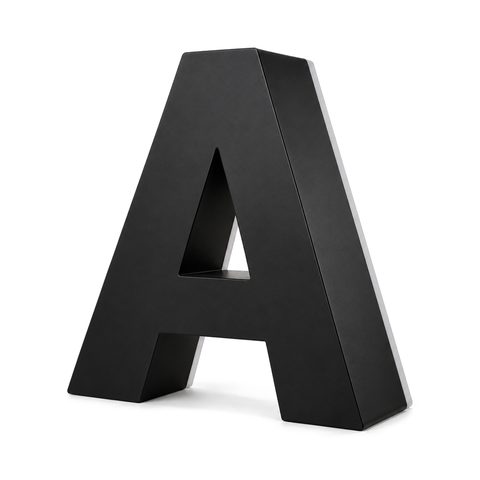
- Painted: any color, matched to your brand. Black reads strongly by day and stands out against the glow at night. See black halo-lit letters.
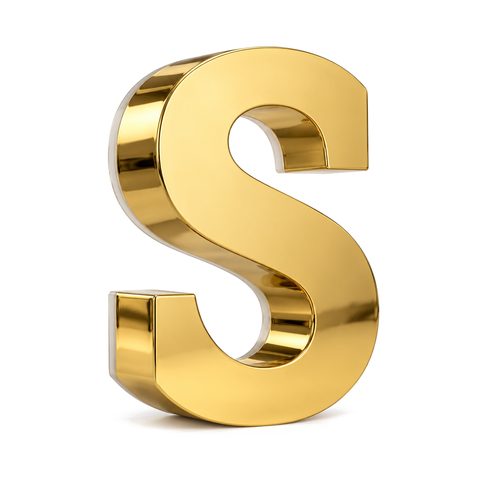
- Gold: titanium-coated stainless with a warm gold color. See gold halo-lit letters.
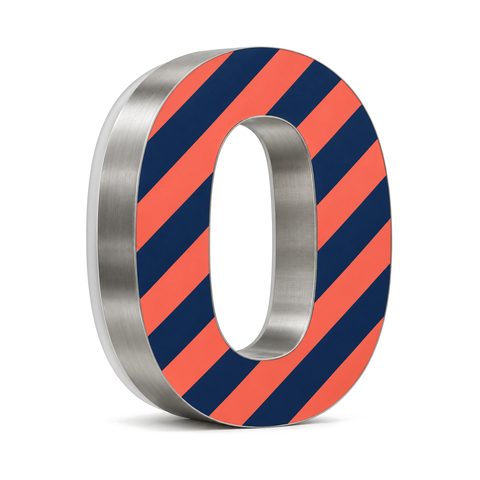
- Printed: your artwork printed on the stainless face, for multi-color logos. See printed-face halo letters.
Stainless steel letter finishes compares them in detail, including where fingerprints show.
Where halo letters work, and where they struggle
They work well on reception walls and in lobbies (see our reception logo wall project), on salon and clinic storefronts, on office buildings, for house numbers (halo-lit house numbers), and at events with battery-powered halo letters.
They struggle when:
- the sign must read from far down a road or highway
- most people see it from a sharp angle
- the wall is dark, glossy or very rough
- strong light around the sign competes with the glow
In those cases front-lit or front-and-back lit letters are the better tool.
Planning a halo sign
- Measure the wall and photograph it by day and at night.
- Note the wall material and color.
- Pick a face finish and a light color.
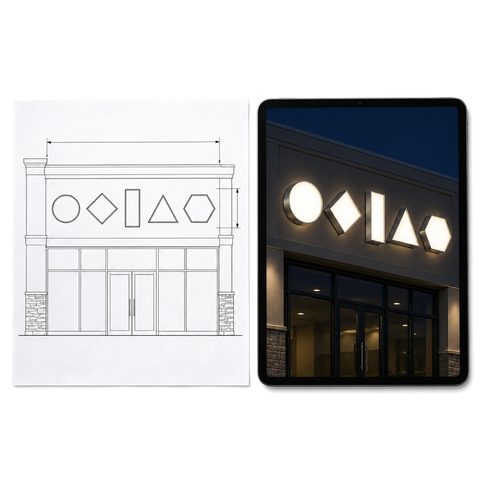
- Send it all through the quote form. We email a free drawing with a lit preview and an exact price; nothing is built until you approve.
- For a ballpark first, the price estimator uses our own recent quotes.
Installation, permits and the electrician for a hard-wired sign are not included, so line those up while your letters are being made.

 Channel Letters on a Backer Panel
 Front and Back Lit Channel Letters
 Free Sign Drawing and Lit Preview with Exact Price
 12V LED Sign Power Supply
 12V LED Modules for Channel Letters