Power and light
LED vs neon signs: glass neon, LED neon and modules
Glass neon, LED neon and LED modules compared for signs: how each makes light, power use, heat, breakage, repairs, and converting old neon letters.
Updated

Glass neon makes light by running high voltage through a sealed glass tube filled with gas. LED signs use small light-emitting diodes on low-voltage DC, either as LED modules hidden inside a letter or as LED neon, a flexible tube that copies the neon look. LEDs have largely replaced glass neon in channel letters because they use less power, do not break like glass and are simpler to repair. Glass neon still has a place in restoration and art pieces.
Three light sources
Glass neon. A skilled bender heats and shapes glass tubing, fills it with gas and seals it. Neon gas glows red-orange. Most other colors come from argon with a small amount of mercury, combined with phosphor coatings on the inside of the glass. A neon transformer steps building power up to thousands of volts to light the tube.
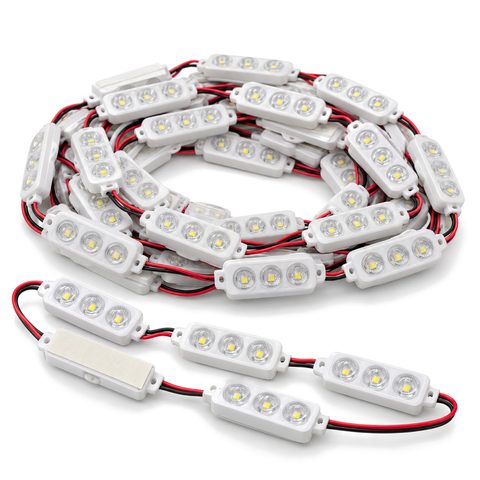
LED modules. Small modules, each with a few LEDs under lenses, joined in a chain by wire and stuck along the inside of each letter. You never see them directly: they light an acrylic face from behind, or the acrylic back of a halo-lit letter. This is how most channel letters are lit today, including our front-lit channel letters.
LED neon. A flexible silicone tube with LEDs inside and a diffuser that blends them into one line. It bends to follow a stroke, runs on 12 V DC and does not get hot like glass neon. It gives the exposed-neon look in open-face neon channel letters.
Side by side
| Glass neon | LED neon | LED modules | |
|---|---|---|---|
| How it makes light | Gas in a glass tube, excited by high voltage | LEDs in a flexible tube behind a diffuser | LEDs inside the letter, behind acrylic |
| Voltage at the light | Thousands of volts from a transformer | 12 V DC | 12 V DC |
| What you see | A glowing glass tube | A continuous line of light | A lit face or a halo, not the light source |
| If it gets knocked | Glass can crack or break | Flexes | Protected inside the letter |
| Heat | Warmer than LED | Stays cool | Stays cool |
| Energy use | Highest of the three for a similar look | A fraction of glass neon | A fraction of glass neon |
| Repairs | A neon specialist bends and fills new glass | Replace a run of LED neon | Replace a module or a run of modules |
| Where it is used | Vintage and art signs, restorations | Open-face letters, neon-look signs | Front-lit, halo-lit and dual-lit letters |
Power use: how to compare
LED signs usually cost far less to run, but you do not have to guess. Every sign has a wattage, and the math is the same for any light source:
- Find the wattage. For an LED sign it is the LED load on the power supply; a power supply draws a little more from the wall than it delivers, because no supply is perfectly efficient. Your electrician can measure an existing neon sign.
- Multiply watts by the hours the sign is on each day, then divide by 1,000. That is kilowatt-hours (kWh) per day.
- Multiply by the days in a year, then by the rate per kWh on your electric bill.
For example, a sign drawing 100 W for 12 hours a day uses 1.2 kWh a day, about 438 kWh a year. Cutting the hours cuts the total in the same proportion, which is why a sign timer or a dusk-to-dawn photocell pays off on any sign. Photocells and sign timers explains the options, and channel letter power supplies shows how the wattage is worked out.
Look: what each does best
- Glass neon has a glow some owners prefer, especially in vintage designs. Each tube is hand-made, so it suits one-off pieces.
- LED neon gives an even, continuous line with no dots, in white, warm white and colors. It is the practical way to get the neon look on a storefront.
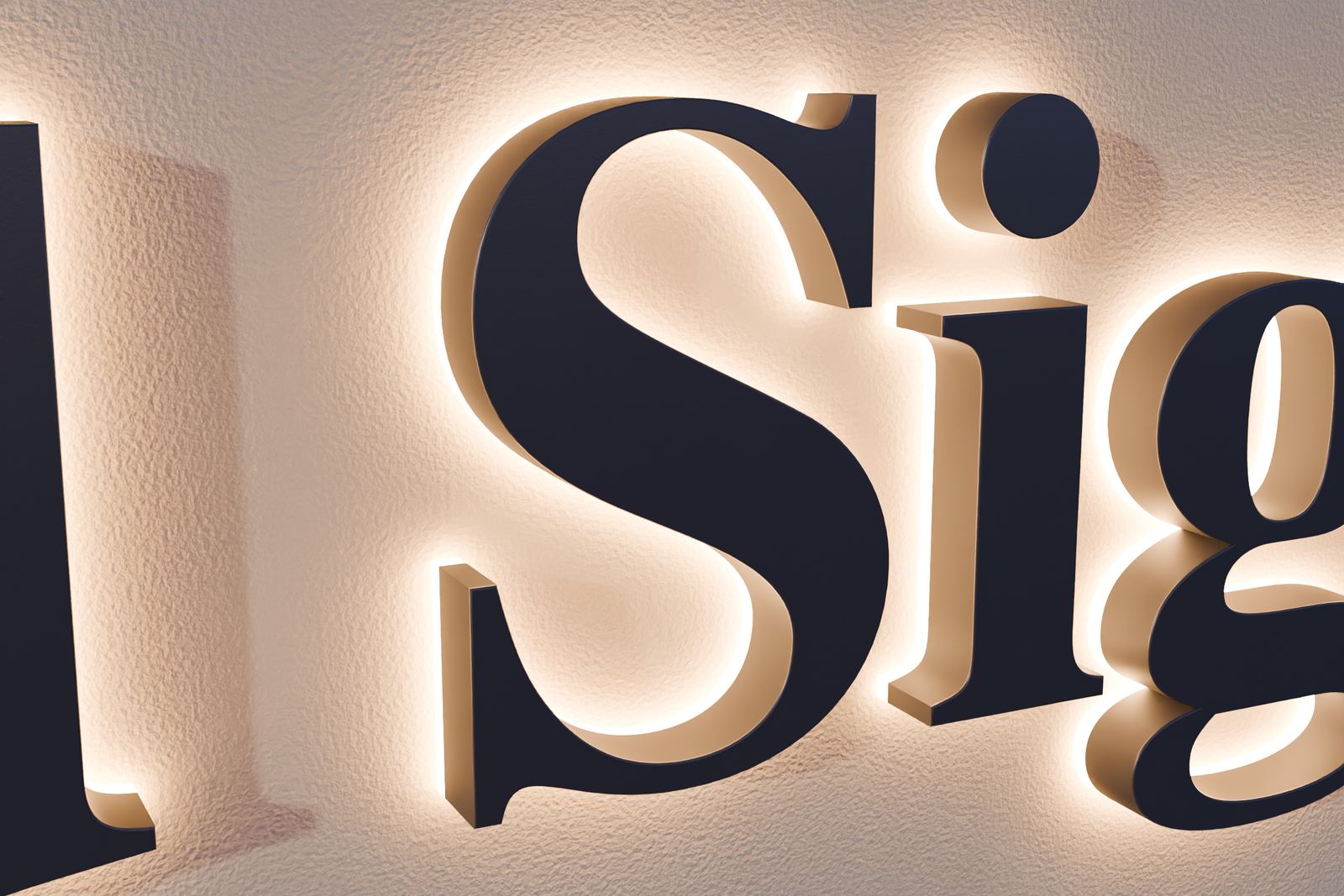
- LED modules do something neon cannot: a whole letter face lit evenly, or a halo on the wall around a metal letter. See front-lit vs halo-lit vs open-face.
Safety and wiring
Both are electric signs, and both connect to building power. The difference is what happens after the connection. A glass neon sign carries high voltage from the transformer to the tubes, so any work on it is for a neon specialist. An LED sign’s power supply turns building power into 12 V DC, and everything on the letter side runs at that low voltage.
The connection to building power is the same rule for both: outdoor signs are hard-wired by a licensed electrician, with a disconnect. Sign electrical requirements covers the circuit and what to ask the electrician. Our signs use a UL-listed power supply and LED modules.
Converting old neon channel letters to LED
Many older channel letters were built for glass neon. If the cans are still sound, they can often be relit with LEDs instead of replaced. The usual sequence:
- Power off at the breaker, and keep it off.
- Remove the old lighting. A sign technician or electrician takes out the neon tubes, their supports, the high-voltage wiring and the transformers. Old tubes and transformers need proper disposal; follow local rules.
- Check the letters. Look for corrosion, loose returns and cracked or faded faces. A replacement acrylic face can be cut for letters with a trim cap.
- Fit LED modules along the middle of each stroke, usually about 3 in apart. LED modules for channel letters come in white, warm white and red.
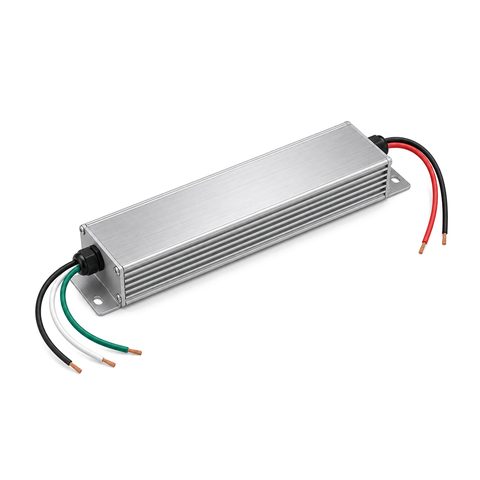
- Install a 12 V power supply sized with headroom for the LED load, such as an outdoor LED sign power supply, wired by a licensed electrician.
- Test after dark and have the work inspected if your city requires it.
Letters with exposed neon as part of the look are a different job. LED modules inside would light the can, not draw a line, so LED neon is the usual replacement there. For parts and steps, see how to replace LED modules, our sign repair page and the repair parts collection.
When glass neon is still the right call
- Restoration. A vintage neon sign with history is often worth repairing as it was. A neon specialist can rebend and refill tubes.
- Art and one-off pieces. Where the hand-made glass is the point, LED neon is a copy, not a substitute.
For a new business sign, LED is the practical choice: lower power, no glass to break and parts you can replace. How long those parts last is covered in how long do LED channel letters last.
How we light our letters
Every lit letter we make runs on 12 V DC LEDs. Front-lit, halo-lit and dual-lit letters use LED modules; open-face letters use LED neon. Indoor signs usually plug in through an adapter; outdoor signs use hard-wired outdoor power supplies. For the neon look without the glass, see the open-face letters collection, or get a free drawing with a lit preview and an exact price.