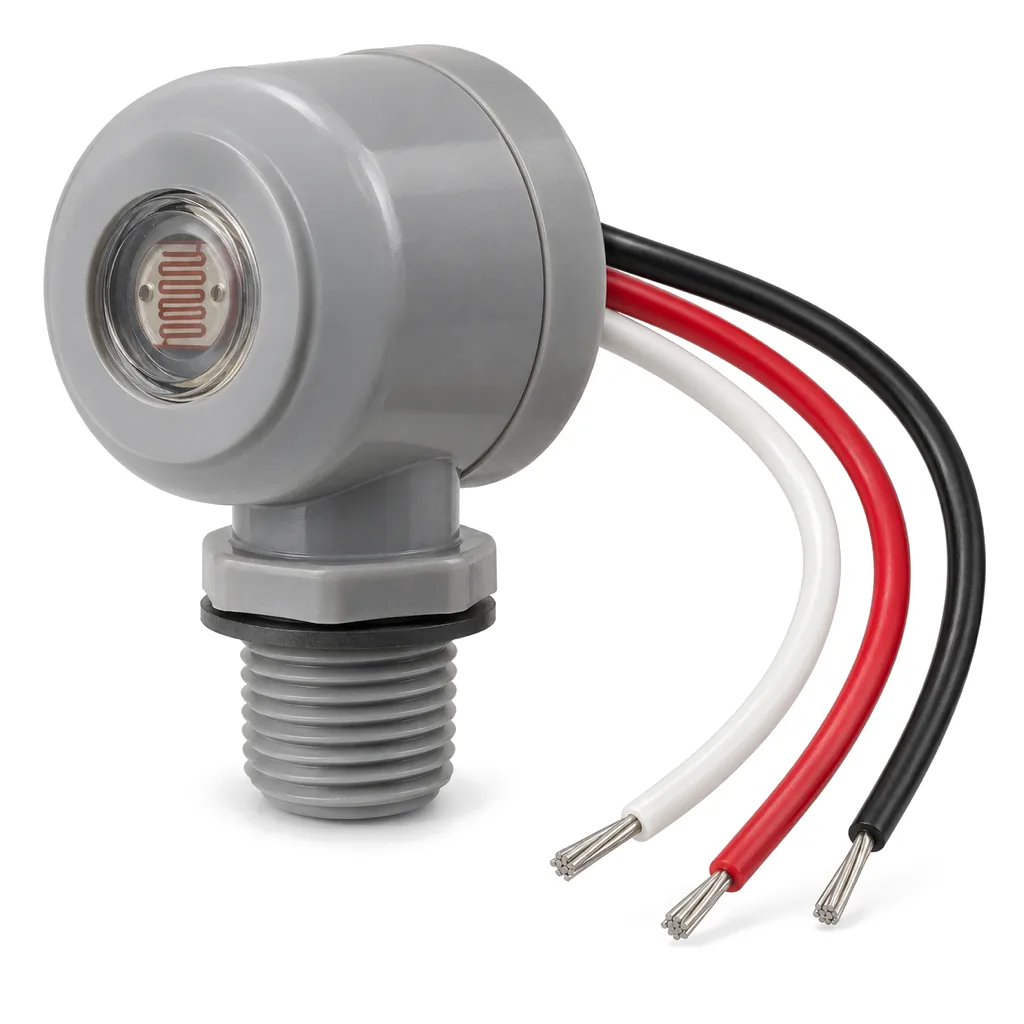
Photos illustrate the product type.
Dusk-to-Dawn Photocell Switch for Outdoor Signs, 120-277V
120-277 V dusk-to-dawn photocell that turns an outdoor sign on at dusk and off at dawn, wired on the line side before the power supply.
A photocell is a small light sensor that switches power on when it gets dark and off when it gets light. Wired to a sign, it turns the sign on at dusk and off at dawn, every day of the year, with no clock to reset when the seasons change. You may also see it sold as a photo eye, a photo control or a dusk-to-dawn sensor.
This photocell is outdoor rated and works on 120 to 277 V AC. It goes on the line-voltage side of the sign, before the sign's power supply, so it switches the power that feeds the supply. It does not go on the 12 V side between the power supply and the letters.
A licensed electrician installs it. Most photocells of this kind have three leads: line in, load out to the sign, and neutral. Commonly the colors are black for line, red for load and white for neutral, but follow the wiring diagram for the unit in hand.
Where you aim the sensor matters. It needs to see the evening sky, not the sign. If light from the sign or a street light reaches the sensor, the photocell can think it is daytime and switch the sign off again, so the sign blinks on and off at dusk. Face the sensor away from the sign and from street lights; many photocell makers recommend facing it north so the sun does not shine straight into it.
A photocell alone keeps the sign lit all night. If you want it off at closing time, pair it with our sign timer: the photocell turns the sign on at dusk and the timer turns it off at the hour you choose.
Expect some natural variation. On a dark, stormy afternoon the photocell may switch the sign on early, and it follows the seasons on its own. Keep the sensor window clean and clear of snow, dust and webs; a covered sensor reads darkness and keeps the sign on in daylight.
One photocell can switch more than one sign power supply, as long as their total load stays within the rating printed on the photocell. When you order new letters, you can also have us wire a photocell into the sign; it is an option in the price estimator.
How to choose
A photocell is the right control when you want the sign lit every night from dusk on. If you want it off at a set hour, add the timer; if you want to switch it from a phone, look at the Wi-Fi switch for indoor 12 V signs.
Before the electrician comes, pick the spot for the sensor: somewhere it sees open sky, out of the sign's own glow and away from street lights and porch lights, ideally facing north. Tell the electrician the circuit voltage the sign will use; this photocell handles 120 to 277 V, but the sign's power supply must match that voltage too.
If the sign has several power supplies, add up their input load and compare it with the rating on the photocell.
Questions
Can I wire it on the 12 V side of my sign?
No. It works on 120 to 277 V AC and goes on the line side, before the sign's power supply. For switching on the 12 V side, use the Wi-Fi smart switch.
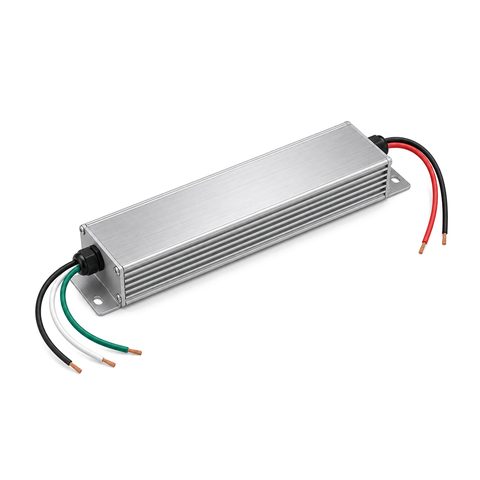 12V LED Sign Power Supply
Which way should the sensor face?
Away from the sign and from street lights, toward open sky. Many photocell makers recommend facing it north so direct sun does not hit it.
Why does my sign blink on and off at dusk?
The sensor is probably seeing light from the sign itself or from a nearby light, so it switches off, then back on when it gets dark again. Turn or shield the sensor so it only sees the sky.
Can it turn the sign off at closing time?
Not by itself; it keeps the sign on until dawn. Pair it with a timer that switches the sign off at the hour you choose.
My building has 277 V circuits. Will it work?
The photocell accepts 120 to 277 V, but the sign's power supply must also match the circuit. Our outdoor power supply takes 100 to 130 V, so check with your electrician which voltage will feed the sign.
My sign stays on during the day. Is the photocell bad?
Check the sensor first: dirt, snow or anything covering its window makes it read night. If it is clean and the sign still stays on in daylight, have an electrician test the photocell and its wiring.
Will it turn the sign on during a storm?
It can. A photocell responds to light, not to the clock, so on a very dark afternoon it may switch the sign on early, then off again when the sky brightens. That is normal.
Photocell or astronomic timer?
An astronomic timer switches at sunset and sunrise calculated for your location and date, with no sensor to aim or keep clean. A photocell responds to the actual light outside. Both follow the seasons; pair either with a closing-time schedule if you want the sign off late at night.
You may also need
-
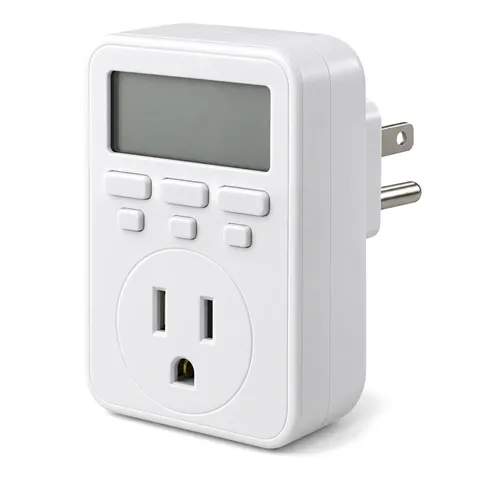
Digital 7-Day Timer for Lit Signs, Plug-In or In-Wall
Programmable 7-day digital timer that switches a lit sign on and off at set times: plug-in type for indoor signs, in-wall type for hard-wired ones.
From $14.99 · 2 options
-
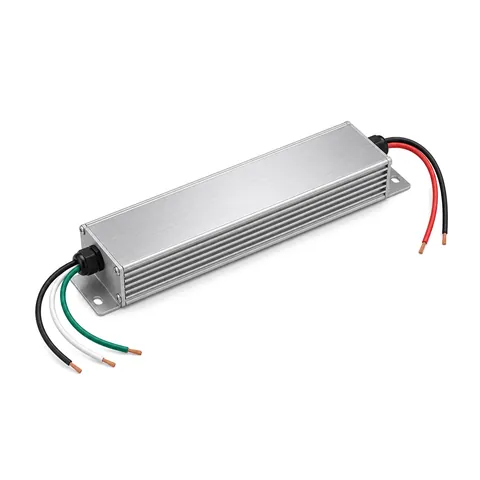
12V LED Sign Power Supply, Outdoor IP67, UL Listed, 60 to 150 W
UL-listed 12 V DC power supply (LED driver) for outdoor channel letters and LED signs: IP67 metal case, 100-130 V AC input, 60, 100 or 150 W.
From $29.99 · 3 options
-
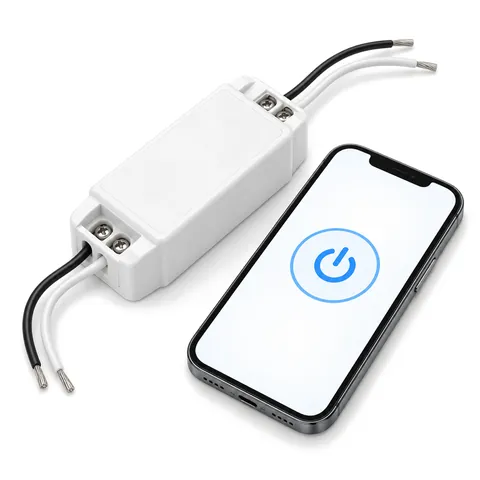
Wi-Fi Smart Switch for 12V Signs, App Schedules and Voice
Inline Wi-Fi switch for the 12 V side of a lit sign: turn it on and off and set schedules from a phone app or with common voice assistants.
$16.99