Power and light
RGB color-changing signs: how they work, when they fit
How RGB channel letters mix red, green and blue LEDs, what the controller does, how to size power, city rules on color change, and when white is better.
Updated
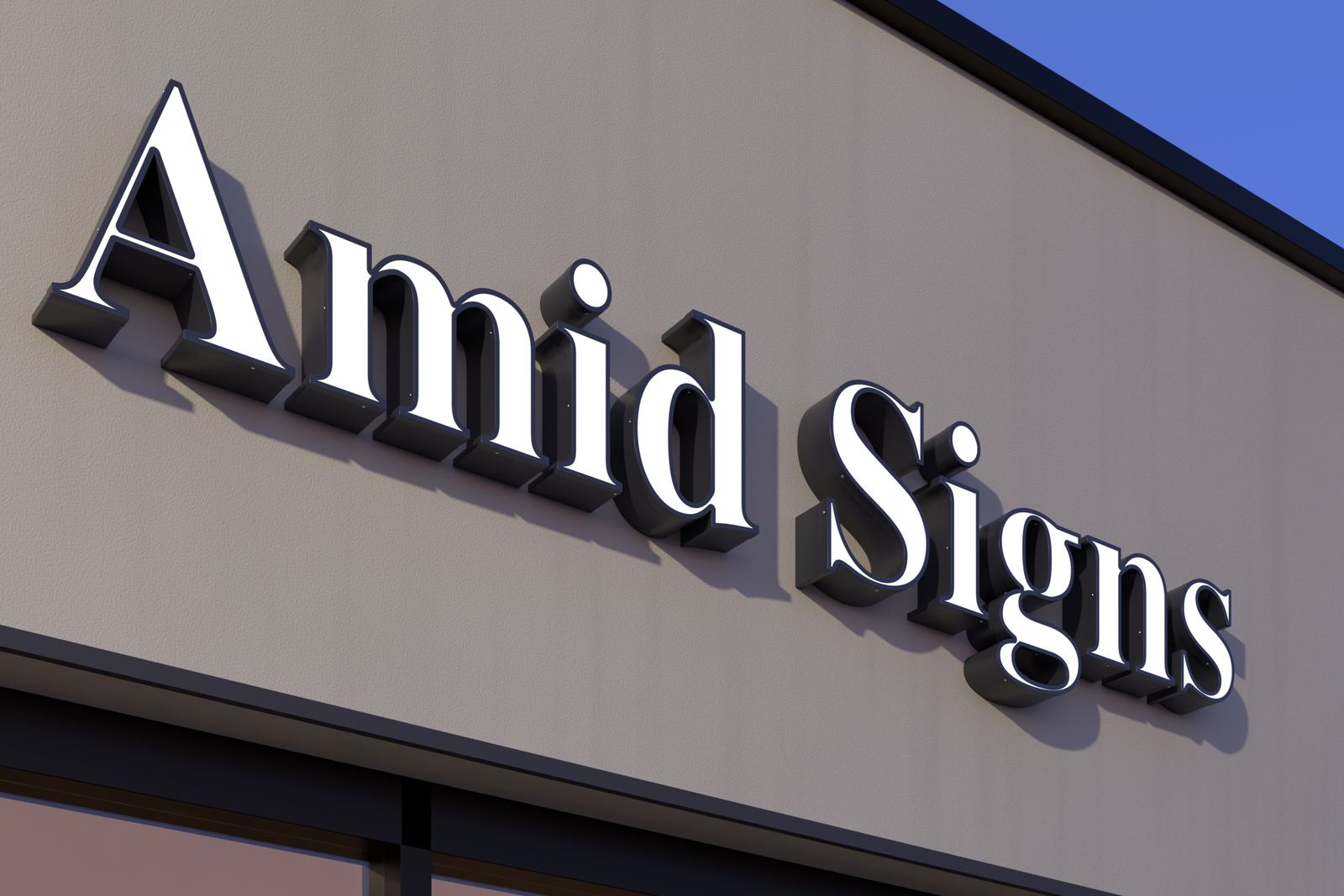
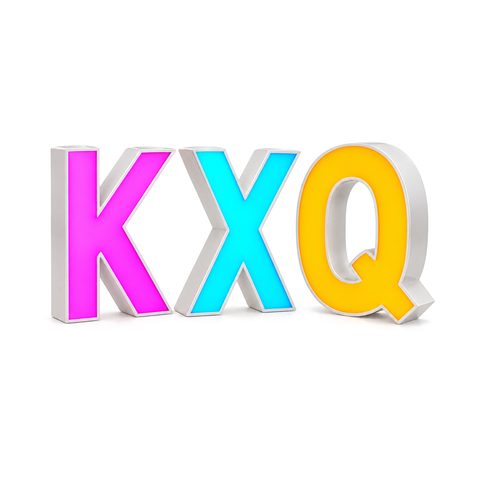
RGB letters have LED modules with red, green and blue chips behind a white acrylic face. A controller mixes the three to make almost any color, to hold one color, or to fade and step through colors, from a remote or an app. They suit bars, venues, events and indoor feature walls. For a fixed brand color on a storefront, a colored face with white LEDs is usually the steadier choice, and many sign codes limit outdoor signs that change color.
How RGB letters work
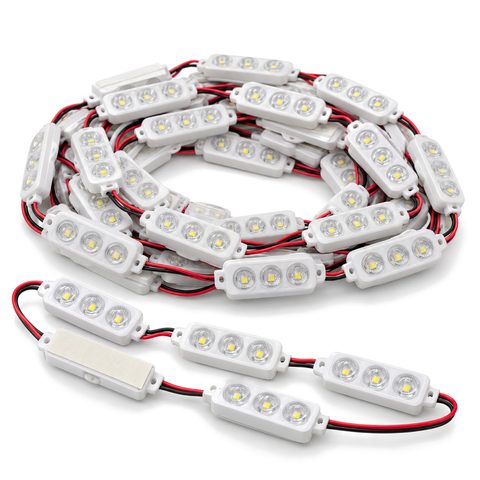
Each LED module carries red, green and blue chips. Most 12 V RGB modules use four wires: one shared positive and one wire for each color. The controller dims each color separately with PWM, the same fast switching used in LED dimmers, and the eye blends the three:
| Red | Green | Blue | You see |
|---|---|---|---|
| On | Off | Off | Red |
| On | On | Off | Yellow |
| Off | On | On | Cyan |
| On | Off | On | Magenta |
| Partly on | Partly on | Off | Orange or amber |
| On | On | On | White (mixed) |
The face must be white, translucent acrylic, so it can take on whatever color the LEDs make. A colored face filters the light: blue light behind a red face, for example, lets almost nothing through. That is why RGB letters use white faces; our RGB color-changing channel letters are front-lit letters built that way, with 304 stainless returns like the rest of our front-lit letters.
What the controller does
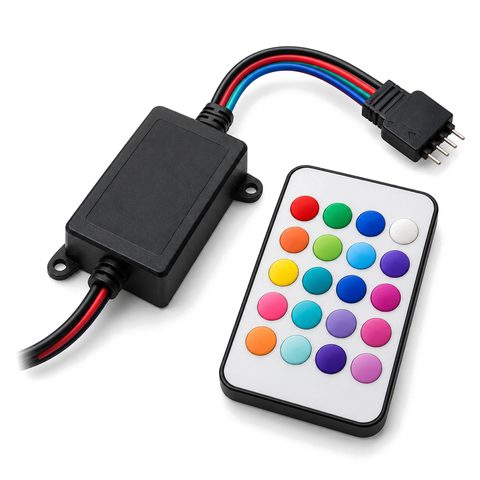
The RGB LED controller sits between the power supply and the letters. Typical modes:
- Static color: pick one color and hold it.
- Fade: a slow blend from one color to the next.
- Jump or flash: quick steps between colors.
- Brightness: dims all the colors together.
Controllers come with a remote, an app, or both. Each color channel on a controller has a current rating. A large sign can exceed it; then the letters are split across controllers, or an amplifier (also called a repeater) with its own power supply drives the extra letters in step with the first group.
Power for RGB letters
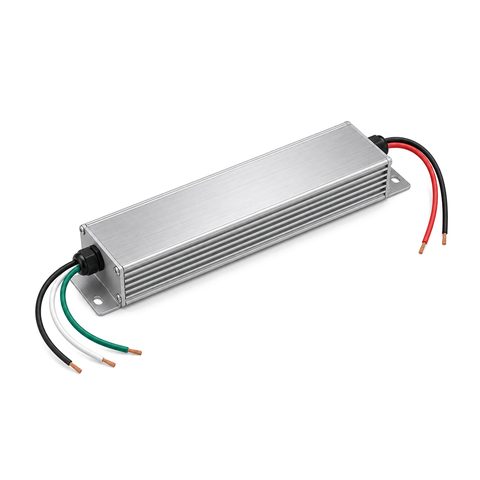
RGB letters run on the same 12 V DC power supplies as white letters. Size the supply for the worst case, which is white, with all three colors at full. Add up the full-on watts of every module and divide by 0.8, as explained in channel letter power supplies. Outdoor RGB signs use the same hard-wired outdoor LED sign power supply, connected by a licensed electrician, with the controller wired between the supply and the letters.
RGB white is not the same as white LEDs
RGB makes white by mixing three colors, and the result often carries a slight tint, bluish or pinkish depending on the mix. Modules with a dedicated white chip (RGBW), or plain white LEDs, give a cleaner white. If the sign will be white most of the time and colored only now and then, white LEDs, or adjustable white from warm to cool, will look better day to day. LED color temperature for signs explains the white options.
When RGB fits
| Use | RGB? | Why |
|---|---|---|
| Bar, lounge or club interior | Good fit | The color can follow the room, the music or the night |
| Events, weddings, rentals | Good fit | One sign works with many color schemes |
| Church or community hall | Sometimes | Seasonal or event colors |
| Reception logo wall | Rarely | Brands usually want one exact color |
| Main storefront sign | Usually not | Brand color consistency, and sign code rules on changing light |
See ideas for bars and lounges, events and weddings and churches and community buildings.
City rules on color-changing signs
Many sign codes treat changing light as a kind of animation. Some ban signs that flash, blink or change their illumination over time; Woodland, California, for example, prohibits signs whose lighting changes with time, with exceptions such as time-and-temperature displays. Others allow changing light but limit how often it changes and how quickly. Where changing light is not allowed, an RGB sign set to hold one color may still be acceptable, but confirm that with your city first.
Before you order RGB letters for an outdoor sign, read your city’s sign code on animated and changing signs, or ask the planner who reviews your sign permit. Signs inside a building are often treated differently, but ask about those too if they face the street through a window.
Matching a brand color
Mixed LED color can come close to a brand color, but it shifts with the face and the controller settings, and it will not match a printed swatch exactly. For a brand that must look the same every night, a colored acrylic face with white LEDs is more predictable. Matching sign colors to your brand explains those options.
Planning an RGB sign, step by step
- Check the code first if the sign will be outdoors or visible from the street.
- Decide the everyday look. Most RGB signs spend most nights on one color or a slow fade; choose that before you choose the effects.
- Choose the control. A remote is simple; an app adds schedules and saved colors.
- Plan where the controller goes. It sits between the power supply and the letters, so it needs a dry spot, and a remote needs to be able to reach it.
- Size the power for all three colors at full, plus 20 percent headroom.
- Look at the lit preview on your drawing in two or three of the colors you will use most.
Ordering RGB letters
Send your logo or text and the wall size through the quote form. We email a free drawing with a lit preview and an exact price, and nothing is built until you approve it. Tell us whether the sign is indoors or outdoors, and whether you want remote or app control, so the right controller is on the quote. Browse all sign controls.
 12V LED Modules for Channel Letters
 Front-Lit Channel Letters